California leads the nation in EV adoption, with over 1.7 million electric vehicles. As you join this movement, have you considered your home’s electrical panel? Many homeowners overlook critical electrical upgrades needed for EV charging, risking slow charging or hazards. Preparing your home ensures safe, efficient, and reliable charging for years. This vital step prevents overloads and safeguards your investment in Southern California.
The transition to an electric vehicle (EV) is exciting, especially in Southern California. EVs are becoming a common sight from Los Angeles to San Diego. However, preparing your home’s electrical system for a dedicated charger is crucial. This often involves a significant upgrade to your electrical panel, the heart of your home’s power. Understanding this preparation is vital for safe, efficient, and reliable charging, preventing overloads, and safeguarding your investment.
Before diving into panel specifics, it’s essential to grasp the different levels of EV charging and their power demands. Your choice of charger directly impacts the electrical modifications required for your Southern California home.
Level 1 Charging: The Basics and Limitations
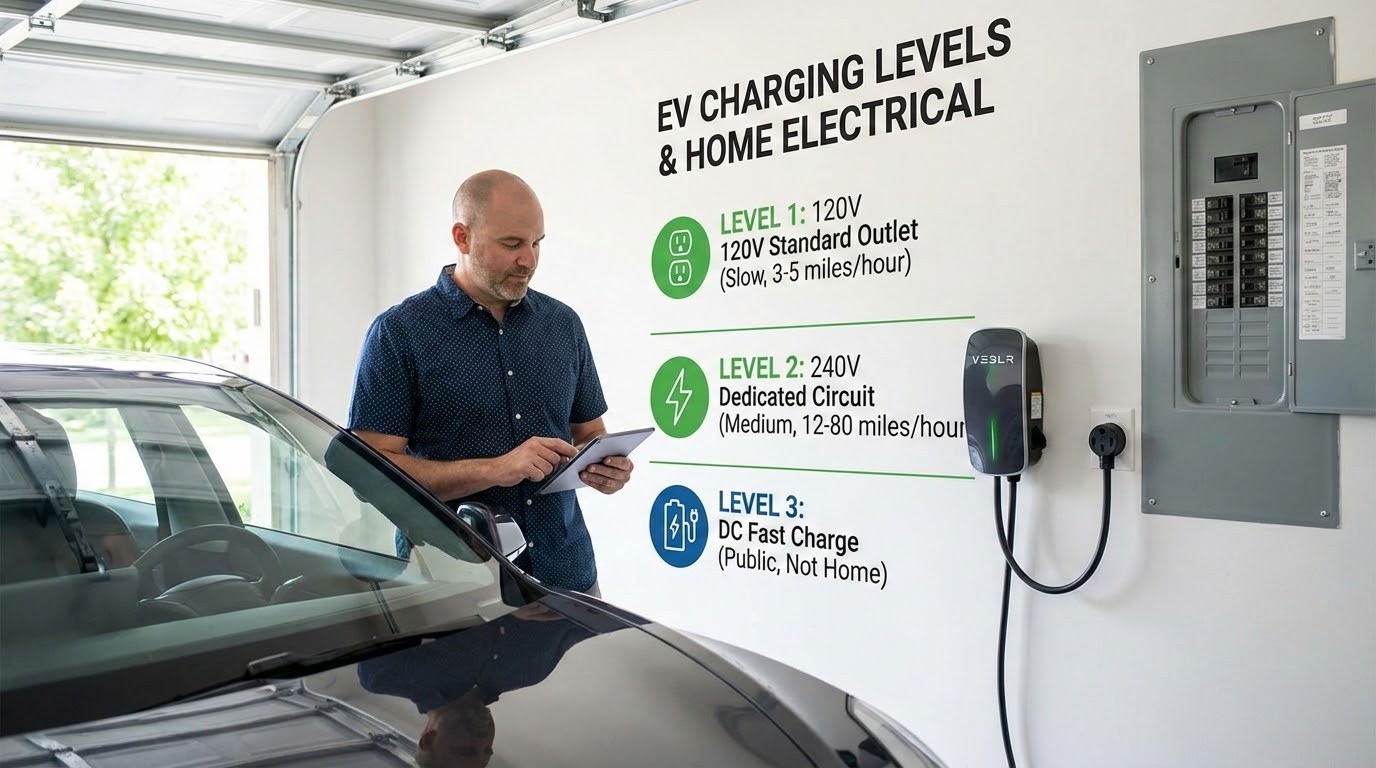
Level 1 charging uses a standard 120-volt (120V) household outlet. It’s often called “trickle charging” due to its slow speed, adding 2 to 5 miles of range per hour. Most EVs come with a portable Level 1 charger. While convenient for occasional use, it’s generally insufficient for daily drivers needing a full charge overnight. Level 1 charging rarely requires panel upgrades, drawing minimal power. Its main limitation is the time it takes, which can be days for larger EV batteries.
Level 2 Charging: The Standard for Home EV Power
For most EV owners, Level 2 charging is the home standard. These chargers operate on a 240-volt (240V) circuit, like an electric dryer, delivering 12 to 80 amps. This significantly boosts charging speed, providing 20 to 60 miles of range per hour, fully charging most EVs overnight. This level of charging typically requires a closer look at your home’s electrical panel.
Installing a Level 2 charger needs a dedicated 240V circuit, demanding substantial electrical capacity. Many Southern California homes, especially older ones, may find their existing panels insufficient, requiring an upgrade. Ignoring these requirements can lead to overloads, tripped breakers, and fire hazards, making electrical panel upgrades for EV chargers critical.
Why Your Electrical Panel Matters for EV Charging Efficiency
Your home’s electrical panel, or breaker box, is the central distribution point for all electricity. It dictates how much power your home can safely draw. Introducing a high-demand appliance like a Level 2 EV charger significantly increases the overall electrical load.
If your panel lacks sufficient “headroom,” it won’t handle the additional power without risking an overload. An overloaded panel can trip breakers, cause flickering lights, and, in severe cases, pose a fire risk. This is why a proper assessment and potential upgrade of your electrical panel are essential safety measures for any Southern California homeowner planning an EV charger installation.
Assessing Your Current Electrical Panel’s Readiness
Before any wires are run or chargers purchased, understand your home’s existing electrical infrastructure. This assessment determines necessary upgrades for a seamless EV charging experience.
Locating Your Home’s Electrical Panel and Key Information
Your electrical panel is usually a gray metal box, often in a garage, basement, or on an exterior wall. Identify the main breaker’s amperage, typically a large switch at the top. Common ratings are 100-amp, 125-amp, 150-amp, or 200-amp service. This number represents total electricity your home can draw. Also, count available breaker slots; an electrician needs an empty double-pole slot for a Level 2 EV charger.
Understanding Your Home’s Amperage and Available Capacity
Your home’s total amperage dictates its electrical capacity. A 100-amp service, common in older Southern California homes, might struggle with a dedicated 50-amp Level 2 EV charger alongside existing appliances like AC or electric ovens. For instance, if existing appliances use 100 amps, adding a 50-amp EV charger would exceed safe limits. Modern homes often have 200-amp service, offering more flexibility. The goal is enough “spare” capacity to safely power your EV charger without overloading the system. This directly impacts the need for an electrical panel upgrade.
The Importance of a Professional Electrical Load Calculation
Determining precise available capacity is complex and never a DIY task. A professional electrical load calculation is critical. A licensed Southern California electrician will assess your home using National Electrical Code (NEC) guidelines. They calculate the total continuous load of all existing appliances, factoring in diversity.
This provides an accurate picture of your home’s current demand versus total capacity. Based on this, they recommend if your existing panel can handle the EV charger or if an upgrade, like a full electrical panel upgrade or subpanel installation, is necessary. Without expert analysis, guessing can lead to unsafe conditions or damage.
Common Electrical Panel Upgrades for EV Chargers in Southern California
If your current electrical panel lacks capacity, established solutions exist. A licensed electrician can guide you to the best option for your Southern California home.
Full Electrical Panel Upgrade: Boosting Your Home’s Power Backbone
A full electrical panel upgrade, often from 100-amp to 200-amp service, is the most comprehensive solution. This involves replacing your entire panel with one that has a higher amperage rating and more breaker slots. It’s typically required for older homes with insufficient capacity or for homeowners planning multiple high-demand additions. While a more significant upfront investment, a full upgrade offers long-term benefits:
- Enhanced Safety: Modern panels provide superior protection against electrical hazards.
- Increased Capacity: Ample power for your EV charger, existing appliances, and future additions.
- Future-Proofing: Prepares your home for evolving electrical demands and smart home technologies.
- Increased Home Value: An upgraded electrical system is a significant selling point.
This upgrade is like giving your home a brand-new, powerful engine ready for today’s and tomorrow’s demands.
Subpanel Installation: A Strategic Solution for Dedicated EV Power
A subpanel installation can be a targeted, cost-effective alternative to a full main panel upgrade. A subpanel is a smaller, secondary panel branching off your main service. It receives power from a dedicated breaker in the main panel and distributes it to its own circuits.
This is ideal if your main panel has enough overall capacity but lacks physical space for a new large breaker, or if the EV charger location is far from the main panel. For example, a subpanel near a carport remote from the main garage panel reduces wiring costs. It dedicates specific power solely to the EV charger, preventing competition with other household appliances.
Circuit Breaker Upgrades and Dedicated Circuits: Safety First
Every Level 2 EV charger requires a dedicated circuit. This means a single circuit breaker in your electrical panel (or subpanel) exclusively powers the charger, preventing power sharing. This dedicated circuit needs the correct amperage rating (e.g., 50-amp, 60-amp) to match your charger and appropriate wire gauge.
Installing an undersized breaker or wiring leads to frequent trips or, worse, overheating and fire. A licensed electrician ensures correct circuit breaker upgrades are performed, providing a safe, reliable power supply to your EV charger, meeting all Southern California electrical codes. These electrical upgrades are paramount for safety.
Navigating Southern California Regulations and Permits for EV Charger Installation
Installing an EV charger and performing panel work in Southern California requires adherence to local regulations and permits, ensuring safety and compliance.
Understanding Local Permitting Requirements in SoCal Cities
In Southern California, nearly all electrical panel upgrades and dedicated circuit installations for EV chargers require permits from your local building department. This is a critical safety measure, ensuring work meets the latest electrical codes (like the NEC, which California adopts) and is inspected by qualified officials.
Requirements vary slightly between municipalities, such as Los Angeles, Irvine, or San Diego. Bypassing permitting leads to fines, difficulties selling your home, and risks due to uninspected electrical work. A licensed electrician familiar with your area will manage the permit application process on your behalf, ensuring your EV charger installation is legal and safe.
The Role of Licensed Electricians in Compliance and Safety
Only a state-licensed electrical contractor is legally allowed to perform permitted electrical work in Southern California. This license confirms the electrician meets stringent education, experience, and insurance requirements. Hiring an unlicensed individual or attempting DIY panel work is highly risky, potentially leading to fires or electrocution. An experienced, licensed electrician understands system complexities, adheres to safety protocols, and correctly handles permits and inspections. They ensure your EV charger installation is functional, safe, and compliant with all local codes. This expertise protects your home, ensures insurance validity, and guarantees a reliable charging system, making them essential for electrical upgrades.
Rebates and Incentives for EV Charger Upgrades in Southern California
Southern California residents can access various rebates and incentives to help offset EV charger installation and electrical upgrade costs. These programs encourage EV adoption and infrastructure development. Utility companies like Southern California Edison (SCE), San Diego Gas & Electric (SDG&E), and Los Angeles Department of Water and Power (LADWP) offer residential Level 2 EV charger installation and associated panel upgrade rebates.
For example, SCE’s Charge Ready Home program provides incentives. Federal tax credits may also be available. A licensed electrician familiar with these programs can guide you on eligibility. Always check with your utility and federal guidelines to maximize financial assistance, making your EV transition more affordable. These EV charging incentives significantly reduce the cost of home electrical upgrades.
The Installation Process: What to Expect from Start to Finish
Once you decide to move forward with your EV charger installation and potential electrical panel upgrades, knowing what to expect makes the process smoother.
Initial Consultation and Home Assessment
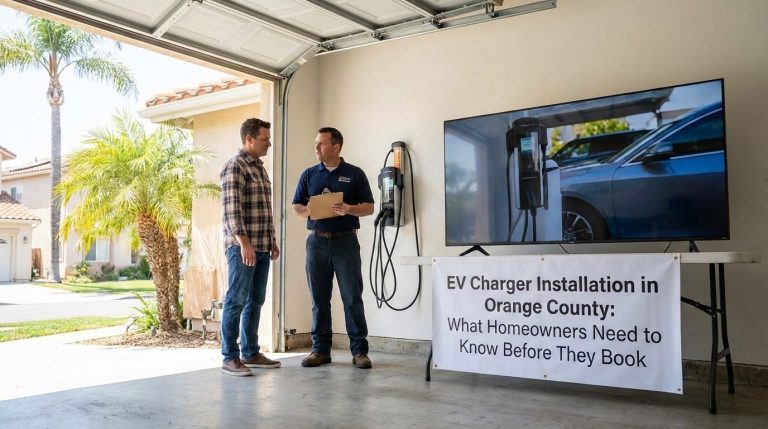
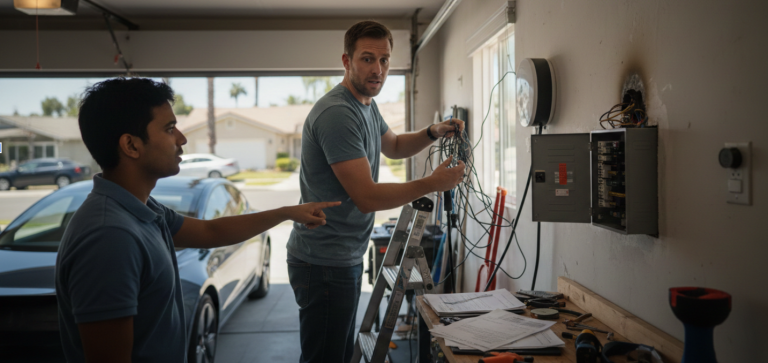
The process starts with an initial consultation with a licensed Southern California electrician. They perform a thorough home assessment, locating your electrical panel, evaluating its condition and amperage, and checking available breaker space. Crucially, they conduct a comprehensive electrical load calculation. They also discuss your preferred charger location. Based on this, they provide a detailed proposal outlining recommended work (panel upgrade, subpanel, dedicated circuit), estimated costs, and a timeline. This is your chance to ask questions about your EV charger installation.
The Permit Application and Approval Phase
After proposal approval, the electrician handles the permit application. Most electrical panel work and Level 2 EV charger installations require a permit from your local building department in Southern California. The electrician submits necessary documentation. This phase can take days to weeks, depending on the municipality. No physical work begins until the permit is approved. A reputable electrician keeps you informed about the application status, ensuring compliance before construction starts on your home electrical upgrades.
Electrical Panel Work and Charger Installation
With the permit approved, the actual electrical panel work and charger installation begin. For a panel upgrade, your home’s main power will be temporarily shut off, usually for several hours. The electrician replaces the old panel with a new, higher-capacity one, runs new wiring for the dedicated EV charger circuit, and installs the correct breaker. If a subpanel is used, they run a feeder line from the main panel to the subpanel, then to the charger. Finally, they mount and wire your chosen EV charging station. A full panel upgrade often takes one to two days; a simpler dedicated circuit installation might take less than a day.
Final Inspection and System Testing
After electrical work, a final inspection is critical. A city or county electrical inspector verifies all work meets approved plans and local/national electrical codes. This ensures safety and compliance for your EV charger installation. Once approved, the electrician performs final system testing of your new EV charger. They power up the circuit, check voltage and amperage, and ensure correct communication with your vehicle. They will explain its operation. With a successful inspection and test, your home is fully prepared to safely and efficiently charge your electric vehicle, powering your Southern California adventures.
Frequently Asked Questions About EV Charger Electrical Panel Preparation
Homeowners often have similar questions when considering EV charger installation. Here are common inquiries regarding electrical panel preparation in Southern California.
Can I install an EV charger without upgrading my electrical panel?
It depends on your current panel’s capacity and charger type. A Level 1 charger (120V) usually doesn’t need an upgrade. For a Level 2 charger (240V), a professional electrical load calculation determines if your panel has enough spare amperage and breaker slots. Many older Southern California homes with 100-amp service require an electrical panel upgrade. Newer homes with 200-amp service might be sufficient. Always consult a licensed electrician for an assessment of your home’s EV charging readiness.
How long does an electrical panel upgrade take in Southern California?
The timeline varies. Permit approval can take days to several weeks, depending on the local municipality. The actual physical work of replacing a panel typically takes one to two full days, with temporary power shut-off. Simpler installations, like adding a dedicated circuit or a subpanel, might be completed in less than a day. Your electrician provides a more precise timeline during the initial consultation for your EV charger installation.
What is the typical cost of an electrical panel upgrade for an EV charger?
Costs in Southern California vary. A dedicated Level 2 circuit installation might range from $800 to $2,500. A full main electrical panel upgrade from 100-amp to 200-amp service, including permits and labor, typically ranges from $2,500 to $6,000, or more for complex scenarios. These are estimates; factors like home age and existing wiring influence the final price. Inquire about available rebates and incentives from Southern California utility providers.
Do I need a smart electrical panel for an EV charger?
While not strictly necessary, a smart electrical panel offers benefits for EV owners. They provide real-time energy monitoring, tracking EV charging consumption and overall home usage. Some smart panels offer load management, dynamically adjusting power to prevent overloading, useful if your existing panel has limited capacity. They can integrate with smart home systems and facilitate participation in demand response programs from Southern California utilities. It’s an investment in future energy management and EV charging efficiency.
What are the risks of DIY EV charger installation or panel work?
DIY EV charger installation, especially panel modifications, poses substantial risks. Incorrect wiring can cause electrical fires, electrocution, damage to your home’s system, and harm to your EV. Unpermitted work results in fines, complications with home insurance claims, and issues when selling your property. Electrical work requires specialized knowledge and tools. It should always be performed by a licensed and insured electrician to ensure safety, compliance, and proper functionality for your home electrical upgrades.
Final Thoughts on Powering Your EV Journey Safely and Efficiently
Embracing an electric vehicle in Southern California is a commitment to sustainability and innovation. Crucially, your home’s electrical infrastructure must be ready for safe, efficient charging. Understanding charging levels, assessing panel capacity, and upgrading are vital for peace of mind. Partnering with a licensed Southern California electrician ensures compliance, safety, and a reliable charging experience. Fortify your home’s electrical backbone now for a worry-free electric future.
Ready to Power Your Electric Vehicle? Take the Next Step Today!
Is your Southern California home ready to join the electric revolution? Don’t leave your EV charging needs to chance. Take the proactive step to ensure your electrical panel is prepared for safe, reliable, and efficient charging. Contact a licensed and reputable Southern California electrician today for a professional home electrical assessment and load calculation. They can provide expert guidance, navigate local permits, and ensure your EV charger installation is perfectly tailored to your home’s needs and future demands. Get started now and drive into a worry-free electric future!