Did you know electric vehicle (EV) sales in California surged by an astounding 39% last year, with Los Angeles leading the charge? As more and more customers, employees, and fleet vehicles go electric, a critical question arises for every forward-thinking business in LA: Are you ready to power their journey? Ignoring the rapidly growing demand for EV charging isn’t just missing an opportunity; it’s a risk to staying competitive and relevant in the evolving market.
The Electrifying Shift: Why Commercial EV Charging is Now Essential for Los Angeles Businesses
The streets of Los Angeles are humming with a quiet revolution. Electric vehicles are becoming the standard, not a niche market. For Los Angeles businesses, from bustling retail centers to corporate parks, this transition presents both a challenge and an immense opportunity to future-proof operations and enhance appeal.
Understanding the ‘What’: What are Commercial EV Charging Stations?
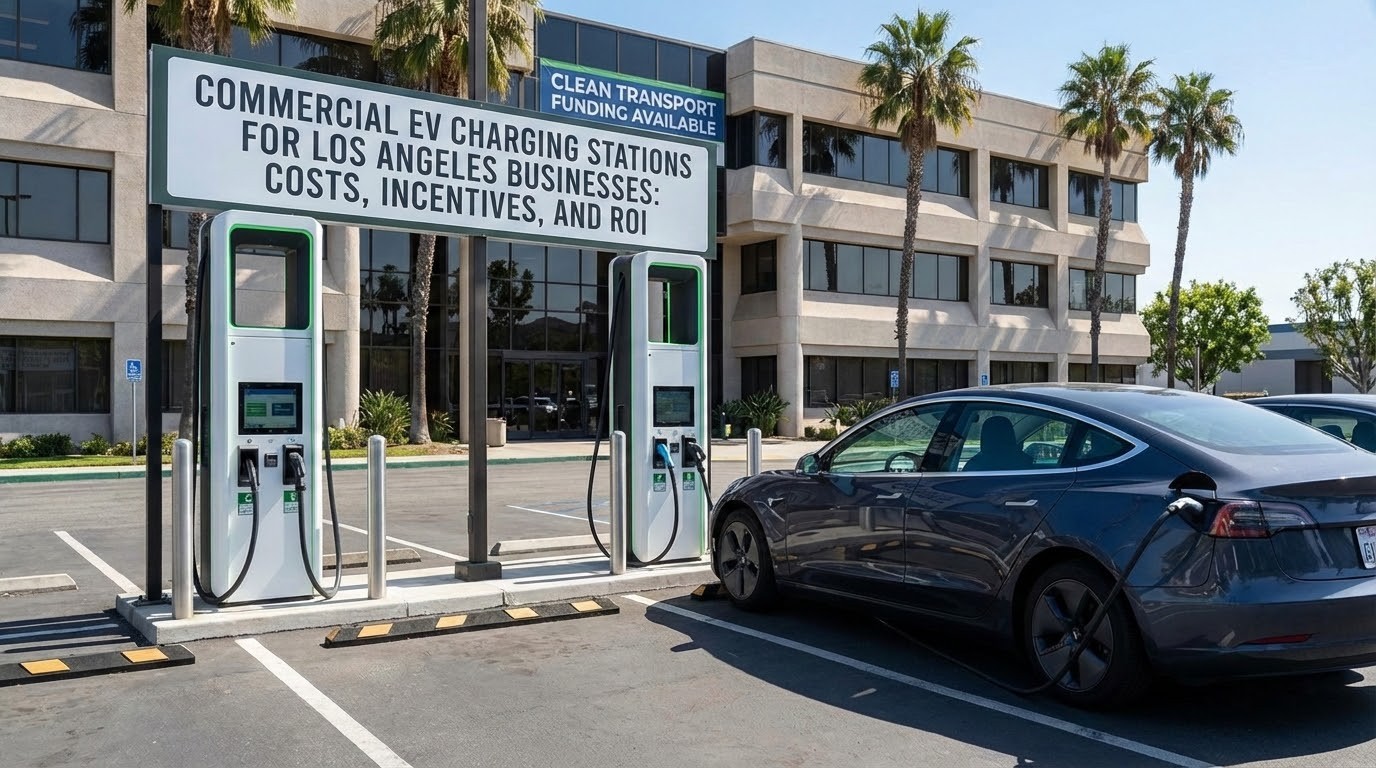
Commercial EV charging stations are power hubs installed at business locations designed to recharge electric vehicles. Unlike residential chargers, they are built for higher usage, faster charging speeds, and often integrate sophisticated management systems for billing, access control, and data tracking. They cater to various needs, whether for employees, customers, or fleet vehicles.
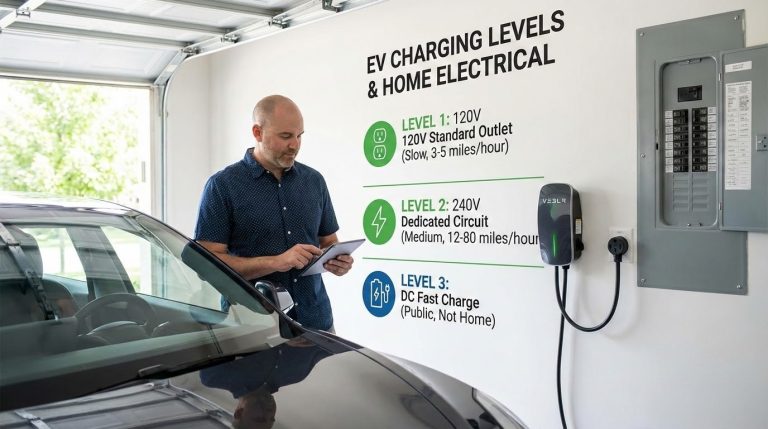
These stations come in different “levels” based on their charging speed. Level 2 chargers are common for workplaces, providing a significant charge in a few hours. DC Fast Chargers (Level 3) offer rapid charging, delivering 80% charge in under an hour, ideal for high-traffic areas or fleet depots requiring quick turnarounds.
Exploring the ‘Why’: Why Los Angeles Businesses Must Embrace EV Charging
The reasons for investing in commercial EV charging are compelling. Firstly, customer and employee demand is skyrocketing. EV drivers actively seek businesses offering charging amenities, influencing where customers shop or stay, and boosting employee recruitment and retention.
Secondly, it’s about brand image and sustainability leadership. Los Angeles has a strong environmental consciousness. Providing EV charging signals your business’s commitment to sustainability and innovation, appealing to eco-conscious consumers and enhancing your corporate social responsibility profile.
Thirdly, there are significant financial and operational benefits. Commercial EV charging can attract new revenue streams, increase customer dwell time, and offer substantial savings for businesses transitioning their own fleets to electric vehicles. Government incentives and rebates make initial costs more manageable, improving the overall ROI of EV charging.
Finally, it’s about future-proofing your business. The trend towards electrification is irreversible, with regulations pushing for more EVs and consumer preferences shifting. Early adapters will be better positioned to thrive, avoiding the scramble faced by late adopters. Installing commercial EV charging stations now is a strategic move for long-term relevance in the dynamic Los Angeles market.
Decoding the Costs of Installing EV Charging Stations for LA Businesses
One of the first questions businesses ask when considering EV charging is, “How much will it cost?” Understanding the various components of EV charging station costs will empower you to budget effectively and make informed decisions. It’s an investment with long-term benefits, but careful planning is key.
Charger Hardware Costs: Understanding the Price Tags of Different EV Charger Types
The upfront cost for the charging equipment varies significantly based on the type and number of chargers. These are the most common options for commercial applications:
Level 2 Chargers (AC Chargers): These are common for workplaces, retail, and multi-unit dwellings, typically delivering 6-25 miles of range per hour.
Cost Range: Expect to pay anywhere from $1,500 to $7,000 per port for hardware alone, varying by brand, features, and durability.
DC Fast Chargers (Level 3 Chargers): These provide much quicker charging, often delivering 100-200+ miles of range in 30 minutes, ideal for high-turnover locations or fleets.
Cost Range: DC Fast Chargers represent a more substantial investment, typically ranging from $25,000 to $100,000+ per port, reflecting their advanced capabilities.
When considering hardware, think about future scalability. Many businesses opt for networked chargers, which allow for remote monitoring, payment processing, and usage data, adding a premium but offering greater control and potential revenue.
Installation Costs and Site Considerations for EV Charging Infrastructure
The installation of EV charging stations often accounts for a significant portion of the total project cost. This involves electrical work, trenching, permitting, and potential upgrades to existing electrical service. EV charging installation costs can vary widely, from a few thousand dollars to tens of thousands.
Electrical Panel Capacity: An upgrade to your main service panel will be necessary if your current panel lacks capacity for the additional EV charger load.
Distance to Electrical Panel: Chargers further from your main electrical panel require more conduit and wiring, increasing material and labor costs for trenching.
Trenching and Concrete Work: Installing chargers in a parking lot may require trenching for underground electrical lines, involving surface repair after installation.
Permitting and Inspections: Los Angeles has specific building codes and permitting requirements, making necessary permits and inspections mandatory.
Utility Upgrades: For multiple DC Fast Chargers, your local utility (LADWP or Southern California Edison) might need to upgrade service, involving lead times and costs.
Network Services and Software: Networked smart chargers entail ongoing subscription fees for the management software, typically $20-$50 per port per month.
It is highly recommended to get multiple quotes from qualified, licensed electricians and EV charging installation companies in Los Angeles. A thorough site assessment by an expert will provide the most accurate cost estimate.
Unlocking Financial Incentives and Rebates for EV Charging in Southern California
The good news for Los Angeles businesses is that significant upfront costs of installing EV charging stations can be substantially offset. A wealth of available EV charging incentives and rebates from federal and state governments, along with local utilities, aggressively promote EV adoption and infrastructure development.
Federal Tax Credits and Grants for Commercial EV Charging Infrastructure
At the federal level, the United States government offers powerful incentives for businesses to install EV charging infrastructure:
Alternative Fuel Vehicle Refueling Property Credit (IRS Form 8911): This federal tax credit offers 30% of the cost of eligible charging equipment and installation, up to $100,000 per property. It applies to properties in low-income or non-urban areas, significantly reducing net investment.
Other Federal Grant Programs: Various federal agencies, such as the Department of Energy, periodically offer grants for clean transportation initiatives. These competitive programs can provide substantial funding, making it crucial to stay updated on federal opportunities.
Understanding the criteria for these programs and consulting with a knowledgeable tax professional can help ensure your business maximizes these federal benefits.
California State and Local Programs for Businesses in Los Angeles
California is a national leader in EV adoption, offering robust incentive programs that specifically benefit Los Angeles EV charging rebates:
California Electric Vehicle Infrastructure Project (CALeVIP): This statewide initiative provides rebates for EV charging equipment purchase and installation. Los Angeles often has dedicated funding, with rebate amounts covering significant portions of hardware and installation costs, especially for DC Fast Chargers or underserved communities.
South Coast Air Quality Management District (SCAQMD): As the air pollution control agency for Southern California, SCAQMD offers grants and incentive programs. Their ‘Charging Up LA’ or similar initiatives frequently fund commercial EV charging installations, greatly benefiting air quality and clean transportation.
Utility-Specific Programs (LADWP & Southern California Edison): Los Angeles Department of Water and Power (LADWP): For businesses within LADWP’s service territory, the utility offers specific rebates for commercial EV charging. Their Charge Up LA program has historically provided incentives for both Level 2 and DC Fast Chargers, reducing costs.
Southern California Edison (SCE): Businesses served by SCE can explore their Charge Ready Programs. These initiatives often help cover the cost of electrical infrastructure upgrades for EV charging, and sometimes include rebates for the charging stations themselves.
Navigating these programs can be complex. Consulting an experienced EV charging solutions provider in Los Angeles is advisable. They can identify applicable incentives, assist with applications, and ensure compliance, dramatically improving the feasibility and ROI of EV charging for your LA business.
Calculating the Return on Investment (ROI) of EV Charging Infrastructure
Beyond the immediate costs and incentives, the true measure of a successful business investment lies in its ROI for EV charging. For commercial EV charging stations, the return isn’t just about direct revenue; it encompasses a wide array of financial, operational, and reputational benefits.
Direct Financial Benefits: Revenue Generation and Cost Savings from EV Charging
Investing in commercial EV charging can open up several direct financial avenues for your Los Angeles business:
Revenue Generation from Charging Fees: If you offer public charging, you can set fees per kWh, per minute, or as a flat session. These fees offset electricity and maintenance costs, contributing to a quicker payback period and potential profit.
Increased Customer Spend and Dwell Time: Businesses like retail stores and restaurants often see customers spending more time and money on-site with EV charging availability. This increased foot traffic translates directly into higher sales.
Fleet Electrification Savings: Transitioning a business fleet to EVs and installing your own charging infrastructure leads to significant operational cost savings. EVs have lower fuel costs (electricity is cheaper per mile) and reduced maintenance expenses.
Demand Charge Management: Smart charging systems allow businesses to strategically manage when vehicles charge, avoiding high “demand charges” from utilities. Scheduling charging during off-peak hours can minimize electricity costs.
Indirect Advantages and Brand Reputation Enhancement through EV Charging
Beyond direct financial gains, the indirect benefits of installing EV charging stations are equally valuable, especially in Los Angeles:
Enhanced Employee Satisfaction and Retention: Offering EV charging as an employee perk boosts morale and loyalty. In a city with notorious commutes, the ability to charge at work is a highly valued benefit, attracting top talent to Los Angeles businesses.
Strengthened Brand Image and Sustainability Leadership: Positioning your business as environmentally responsible and forward-thinking resonates with today’s consumers. EV charging demonstrates a tangible commitment to sustainability, enhancing your brand reputation and attracting eco-conscious customers.
Increased Property Value and Attractiveness: For commercial property owners, installing EV charging can increase property market value and attractiveness. Tenants increasingly seek buildings with EV infrastructure, making it a competitive advantage.
Future-Proofing and Regulatory Compliance: As regulations evolve and EV adoption accelerates, having charging infrastructure in place future-proofs your business. It ensures you’re ahead of potential mandates and positioned to meet growing demands.
Calculating the full ROI involves quantifying these direct and indirect benefits over the charging stations’ projected lifespan. While some benefits are harder to quantify, their strategic value for your business’s long-term success in Los Angeles is undeniable.
Practical Steps for Implementing Commercial EV Charging at Your Los Angeles Business
Embarking on the journey of installing commercial EV charging can seem daunting, but a structured approach makes it manageable and rewarding. This framework provides actionable steps for Los Angeles businesses, from initial assessment to successful deployment.
Step 1: Assessing Your Business Needs and Site Suitability for EV Charging
Before any equipment is ordered or trenching begins, a thorough assessment is crucial. This involves understanding your specific requirements and the physical capabilities of your site.
Identify Your Primary Users: Determine who will use the chargers (employees, customers, fleet), as this dictates type, number, and placement.
Determine Charging Needs: Assess desired charging speed and typical dwell time to select between Level 2 and DC Fast Chargers.
Conduct a Site Survey: Engage an electrician or EV charging consultant to evaluate electrical infrastructure and identify optimal charger locations.
Consider Future Expansion: Plan for growth by oversizing conduit or efficiently upgrading panel capacity to save costs later.
Step 2: Choosing the Right EV Charging Partner and Navigating Permitting
Once your needs are clear, selecting the right vendors and understanding the regulatory landscape in Los Angeles is paramount.
Select an EV Charging Solutions Provider: Choose a company with a proven track record in Los Angeles, offering comprehensive services from assessment to maintenance.
Evaluate Hardware and Software Options: Compare charging station brands based on reliability, features, warranty, and support. For networked chargers, consider the software platform’s ease of use.
Understand Permitting in Los Angeles: Your contractor should handle all necessary permits from LADBS, ensuring compliance with local codes and ordinances.
Apply for Incentives and Rebates: Work with your EV charging partner or a consultant to identify and apply for all eligible federal, state, and local incentives.
Step 3: Installation, Deployment, and Ongoing Management of Your Chargers
With planning complete and permits in hand, it’s time for the physical installation and preparation for operation.
Professional Installation: Ensure all work is carried out by licensed electricians, adhering to safety standards and local codes.
Commissioning and Testing: After installation, each charging station must be commissioned and tested to ensure correct functionality and network communication.
Launch and Marketing: Announce the new EV charging stations through your website, social media, and local directories like PlugShare.
Ongoing Maintenance and Support: Establish a service agreement for routine maintenance, software updates, and prompt repairs to ensure optimal performance.
By following these actionable steps, your Los Angeles business can successfully implement commercial EV charging, turning a complex project into a valuable asset.
Real-World Success Stories: LA Businesses Thriving with EV Charging
Seeing is believing, and understanding the tangible benefits of commercial EV charging is best demonstrated through the experiences of other businesses. These case studies highlight how various Los Angeles establishments have leveraged EV charging to their advantage.
Case Study 1: The Boutique Hotel Offering a Premium Amenity
A boutique hotel in Santa Monica, noting increasing EV-driving guests, invested in two dual-port Level 2 chargers. They partnered with an EV charging network, allowing guests to pay via app or room bill.
Results:
Increased Guest Satisfaction: Positive reviews frequently highlighted the convenience of EV charging.
New Customer Segment: The hotel attracted eco-conscious travelers specifically seeking EV amenities, expanding its market reach.
Revenue Stream: Charging fees covered electricity costs, and guests increased spending on dining and spa services.
The general manager noted, “EV charging has transformed from a ‘nice-to-have’ into a ‘must-have’ for our discerning clientele, paying for itself in guest loyalty.”
Case Study 2: The Tech Startup Boosting Employee Morale and Retention
A growing tech startup in Silicon Beach, with an environmentally-aware workforce, faced challenges with employee parking and charging. They installed six free Level 2 charging stations in their underground garage.
Results:
Enhanced Employee Satisfaction: A survey showed a significant jump in employee satisfaction and perceived value of benefits.
Improved Recruitment: Free workplace charging became a key selling point for recruiting talent committed to sustainable commuting.
Sustainability Credibility: The company reinforced its environmental stewardship, aligning with its brand values.
The HR director commented, “Offering EV charging was a small investment that yielded huge returns in employee happiness and retention.”
Case Study 3: The Retail Center Attracting Shoppers and Extending Stays
A large outdoor shopping mall in the San Fernando Valley sought to revitalize foot traffic. They installed eight Level 2 chargers and two DC Fast Chargers, strategically located, with a tiered pricing model.
Results:
Increased Dwell Time and Spend: Analytics showed EV drivers spent 20-30% more time at the mall and increased spending across various shops. Competitive Advantage: The mall differentiated itself from competitors lacking modern EV infrastructure, attracting a new demographic.
Positive Public Relations: The mall received local media attention for its commitment to sustainability and convenience.
A spokesperson stated, “Our EV charging stations are more than just power outlets; they’re magnets for a valuable customer segment, directly impacting our tenants’ success.” These stories demonstrate the tangible ROI of EV charging.
Frequently Asked Questions About Commercial EV Charging in Los Angeles
Understanding the common concerns and questions around commercial EV charging can help demystify the process for Los Angeles businesses. Here are five frequently asked questions that address key user search intents.
1. What are the ongoing maintenance requirements and costs for commercial EV charging stations?
Ongoing maintenance for commercial EV charging stations is generally minimal but essential for reliability. It primarily involves routine inspections and software updates, often handled remotely by the service provider. Costs can include a yearly service contract, typically ranging from $200 to $800 per port annually. Electricity costs will be the primary ongoing expense, though smart charging can help manage these.
2. How does an EV charging station impact my business’s electricity bill and what are demand charges?
An EV charging station will increase your electricity bill, with the impact varying based on usage and your utility’s rate structure. Demand charges are fees for commercial utility customers (LADWP and SCE) based on your highest peak electricity usage. DC Fast Chargers can significantly increase demand charges if not properly managed. Implementing smart charging solutions to schedule charging during off-peak hours can help mitigate these costly fees.
3. Can I make my commercial EV charging stations available to the public and how do I manage payments?
Yes, many businesses choose to make their commercial EV charging stations available to the public, attracting new customers and generating revenue. This requires networked smart chargers that connect to a cloud-based platform. This platform allows you to set pricing, monitor usage, process payments, and provide customer support, with drivers using mobile apps or RFID cards.
4. What’s the difference between Level 2 and DC Fast Chargers, and which is right for my business?
Level 2 (AC) chargers add 12-80 miles of range per hour, ideal for locations where vehicles park for several hours (workplaces, hotels, retail). DC Fast Chargers (Level 3 or DCFC) add 100-200+ miles of range in 20-60 minutes, best for high-turnover locations like gas stations or fleets needing rapid turnaround. The right choice depends on your users’ typical dwell time.
5. How long does it typically take to install commercial EV charging stations in Los Angeles?
The timeline for installing commercial EV charging stations in Los Angeles typically ranges from 3 to 9 months, longer for complex projects. This includes initial site assessment (2-4 weeks), permitting (6-12 weeks), hardware ordering (4-12 weeks), and physical installation (2-6 weeks). Utility upgrades can add significant delays.
Final Thoughts: Powering Forward with Confidence in Los Angeles
The electrifying future is not just coming; it’s already here, and Los Angeles is at its epicenter. Embracing commercial EV charging is no longer an optional amenity, but a strategic imperative for businesses in this vibrant city. With the right planning, a knowledgeable partner, and robust support from various programs, your LA business can confidently invest in this transformative technology. Secure your place in the electrified future, enhance your brand, and unlock new opportunities for growth. It’s time to power your business forward.