Did you know that by 2030, California aims to have 1.5 million zero-emission vehicles? Los Angeles leads this electric revolution, with more residents and businesses embracing EVs daily. But for many, a key question remains: what’s the true cost of fueling this sustainable future right at home or your business? Understanding EV charger installation costs in Los Angeles for 2026 is critical for planning your transition, for today and a rapidly evolving tomorrow. This guide offers a clear roadmap for your electric future.
Understanding the Core Investment: What an EV Charger Installation Entails
An EV charger installation connects your vehicle to your property’s electrical grid, providing a steady power supply. It ensures convenience, safety, and efficiency, allowing easy and reliable EV charging at home or your business. This project goes beyond just the charger, involving several key components with associated expenses.
Key Factors Significantly Influencing EV Charger Installation Costs in Los Angeles
The cost of an EV charger installation in Los Angeles is dynamic, not fixed. It’s influenced by various factors, from your chosen charger type to your property’s specific electrical setup. Understanding these variables is crucial for an accurate estimate and informed decision-making.
Exploring the Different Types of EV Chargers and Their Associated Costs
Your choice of EV charger significantly impacts both hardware cost and installation complexity.
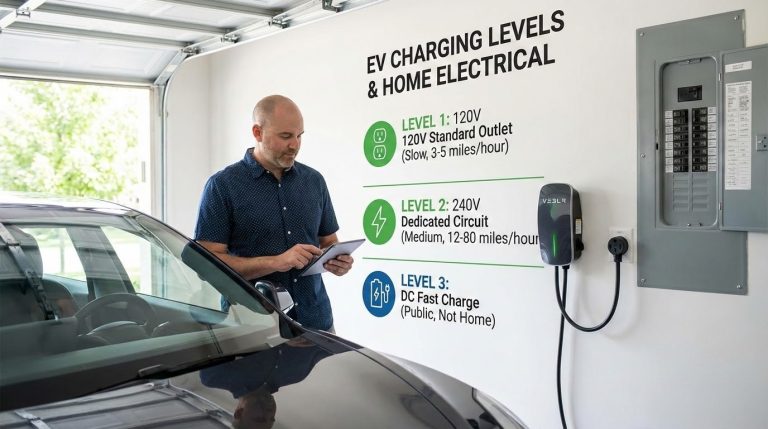
Level 1 Chargers: Plug into 120-volt outlets, offering 2-5 miles/hour. Installation costs are minimal, usually just for an outlet. Rarely a primary solution for most Los Angeles drivers.
Level 2 Chargers: The popular choice, using a 240-volt circuit (like an oven or dryer). Adds 20-60 miles/hour, ideal for homes and businesses. The charger unit itself can range from $300 to $1,000+ depending on brand and features (e.g., smart charging, Wi-Fi connectivity). Los Angeles EV owners often opt for this for optimal home charging.
DC Fast Chargers: High power, mostly public/commercial. Charges 80% in 20-60 minutes. Residential installation is extremely rare and cost-prohibitive in Los Angeles, often running into tens of thousands of dollars due to high power demands and infrastructure requirements.
Analyzing Your Home or Business Electrical Panel and Service Capacity
Your property’s existing electrical infrastructure is a major cost determinant for EV charger installation in Los Angeles.
Sufficient Capacity: If your electrical panel has enough spare capacity and a breaker slot, installation is straightforward, keeping costs lower.
Panel Upgrades: Many older homes in LA might need an upgrade. A sub-panel can cost $1,000-$2,500, while a full main panel upgrade ranges from $2,500-$6,000 or more, depending on complexity.
Service Line Upgrades: In rare cases for properties with very old or undersized service, the entire utility service line might need an upgrade, adding several thousand dollars to the project.
Understanding the Labor Costs for Qualified Electricians in Los Angeles
Skilled electrician labor rates in Los Angeles reflect the high cost of living.
Hourly Rates: Electricians in LA typically charge between $100 to $200 per hour for EV charger installations.
Installation Time: A standard Level 2 installation without major panel work might take 4-8 hours. More complex jobs involving trenching, longer wire runs, or panel upgrades could extend to 10-20 hours or even longer.
Navigating Permitting and Inspection Requirements in Los Angeles
Permits ensure EV charger installations meet safety codes and standards in Los Angeles.
Permit Fees: Permit fees from the Department of Building and Safety (LADBS) can range from $50 to $500. Your chosen electrician or contractor should handle this process.
Inspection: After installation, an LADBS inspector reviews the work. Any required corrections found during inspection can add to labor and material expenses.
Additional Materials and Miscellaneous Costs to Consider
Beyond the EV charger unit and core electrical work, other materials contribute to the overall cost.
Materials: High-gauge wiring (240-volt service) and protective conduit (e.g., PVC for outdoors, EMT for indoors) are essential. Mounting hardware is also needed.
Trenching: For outdoor chargers requiring buried electrical lines, trenching services can add $5 to $20 per linear foot, depending on terrain and depth.
Other: Smart features (Wi-Fi, app control) often mean a slightly higher unit cost. Installing a whole-house or dedicated surge protector is a worthwhile additional cost for protection.
Actionable Strategies for Reducing Your EV Charger Installation Expense
Los Angeles residents and businesses can significantly lower out-of-pocket expenses through available incentives and smart planning.
Leveraging Federal Tax Credits for EV Charging Equipment
Federal incentives often include EV charging equipment, providing substantial savings for homeowners and businesses in Los Angeles.
Tax Credit: The Alternative Fuel Vehicle Refueling Property Tax Credit typically offers 30% of the cost of qualified EV charging equipment (hardware and installation), up to a maximum of $1,000. Consult a tax professional for eligibility and proper filing.
Exploring California State and Local Rebate Programs in Los Angeles
California, a leader in EV adoption, along with local utilities like LADWP, offers robust programs to reduce EV charger installation costs.
CALeVIP: The California Electric Vehicle Infrastructure Project offers various rebate programs across regions, often covering a significant portion of charger and installation costs. These can be several thousands of dollars, especially for commercial or multi-family installations in Los Angeles. Check the CALeVIP website for current LA-specific 2026 offerings.
LADWP Rebates: Los Angeles Department of Water and Power frequently offers its own rebate programs. In past years, LADWP has provided residential Level 2 EV charger rebates, sometimes up to $1,000 or more. Larger incentives can be available for commercial properties or multi-unit dwellings. Always check the official LADWP website for the most up-to-date programs for 2026.
Practical Tips for Minimizing Installation Costs Without Compromising Quality
Smart planning and clear communication with your installer help manage EV charger installation costs in Los Angeles.
- Get Multiple Quotes: Always solicit quotes from at least three licensed and insured electricians specializing in EV charger installations. Compare itemized costs for transparent service.
- Location: Install the EV charger as close to your main electrical panel as possible. This minimizes wiring length and labor, translating to lower costs.
- Know Your Panel: Before calling an electrician, take a photo of your electrical panel. Knowing its amperage and condition helps electricians provide more accurate initial estimates.
- Future-Proof Wisely: While considering future EV needs, avoid significantly over-specifying if it requires costly panel upgrades you could otherwise avoid. A 32-amp or 40-amp Level 2 charger is often perfectly adequate for overnight charging.
- Bundle Work: If you’re planning other electrical upgrades or repairs for your home or business, consider doing them at the same time as the EV charger installation for potential labor savings.
Choosing the Right EV Charger Installer in Los Angeles
Selecting a reputable contractor is crucial for the safety, efficiency, and long-term reliability of your EV charger installation in Los Angeles.
What to Look for in a Qualified and Reputable Electrician
Expertise and peace of mind come with choosing the right EV charger installer.
- Licensing and Insurance: Verify the electrician or company is licensed by the California Contractors State License Board (CSLB) and fully insured.
- EV Charger Experience: Look for electricians who specifically advertise expertise in EV charger installations. This specialized knowledge is key in Los Angeles.
- Positive Reviews and References: Check online reviews (Yelp, Google) and ask for references from past clients for similar installations.
- Transparent Quoting: A good contractor provides a detailed, itemized quote clearly breaking down costs for hardware, materials, labor, and permits.
- Warranty and Support: Inquire about warranties on both the EV charging equipment (typically 3 years) and the installation work itself.
Real-World Scenarios: EV Charger Installation Costs in Los Angeles in 2026
Here are hypothetical scenarios to illustrate EV charger installation costs in Los Angeles for 2026, including potential incentives.
Scenario 1: Simple Residential Level 2 Installation in a Newer Home
Sarah, in Culver City, has a modern 200-amp panel, installing a 40-amp Level 2 charger directly adjacent to it.
- Total Estimated Cost: $1,280 – $1,520
- Estimated Net Cost (with Federal & LADWP residential incentives): $396 – $636
- Outcome: A highly cost-effective installation thanks to existing electrical capacity and strong incentives.
Scenario 2: Complex Residential Level 2 Installation in an Older Home
David, in Silver Lake, has a full 100-amp panel, requiring an upgrade and a longer wire run to an outdoor charger.
- Total Estimated Cost: $7,150 – $7,900 (includes a main electrical panel upgrade)
- Estimated Net Cost (with Federal & LADWP residential incentives): $5,650 – $6,400
- Outcome: A significantly higher investment due to the panel upgrade, but incentives still provide substantial mitigation.
Scenario 3: Small Business Level 2 Installation for Customer Use
Maria, a Santa Monica coffee shop owner, installs two commercial-grade Level 2 chargers in her parking lot, needing trenching to run power.
- Total Estimated Cost: $9,250 – $10,125 (for two chargers, includes trenching and commercial materials)
- Estimated Net Cost (with Federal, CALeVIP & LADWP commercial incentives): $1,250 – $2,125
- Outcome: A substantial initial investment for the business, dramatically reduced by strategic use of significant commercial incentives, making it an attractive offering for EV customers in Los Angeles.
Looking Ahead to 2026: Future Trends and Cost Projections
The EV market continuously evolves, and 2026 will see further advancements impacting EV charger installation costs in Los Angeles.
Anticipated Developments in Charger Technology and Pricing
EV charger units are expected to become more sophisticated and potentially more affordable over time.
- Smart Chargers: Most new Level 2 chargers will likely come with advanced smart features as standard (e.g., load balancing, remote monitoring, app control), potentially reducing base model prices due to increased competition.
- Bi-directional Charging (V2G/V2H): Vehicle-to-Grid (V2G) and Vehicle-to-Home (V2H) technologies are expected to become more prevalent by 2026. While initial costs for these chargers will be higher, long-term energy savings and potential revenue could offset them.
- Standardization: Greater standardization of charging protocols and connectors (like NACS) could simplify the market, leading to more universally compatible and cost-effective chargers.
The Impact of Increased EV Adoption on Installation Demand and Pricing
California’s aggressive EV goals mean a significant surge in demand for charging infrastructure, particularly in Los Angeles.
- Installer Competition: As demand rises, so will the number of electricians specializing in EV installations. This increased competition could help stabilize or even slightly reduce labor costs in the long run.
- Supply Chain: Greater demand for electrical components and wiring could lead to more efficient supply chains, potentially lowering material costs over time, though sudden spikes might temporarily strain supplies.
- Building Codes: Los Angeles building codes and electrical standards may continue to evolve to accommodate EV charging, potentially impacting complexity and cost based on specific updates.
Frequently Asked Questions About EV Charger Installation Costs in Los Angeles
Addressing common queries about EV charger installation in Los Angeles.
Can I Install an EV Charger Myself to Save Money in Los Angeles?
No. Installing a Level 2 EV charger requires significant electrical work that must comply with strict safety codes and require permits from LADBS. Attempting to do it yourself is dangerous, can void your home insurance, and may result in fines or mandated professional re-installation. Always hire a licensed electrician for Level 2 or higher installations.
How Long Does a Typical EV Charger Installation Take in Los Angeles?
The duration varies. A straightforward Level 2 installation in a garage with available panel capacity can often be completed in 4-8 hours. However, jobs requiring electrical panel upgrades, extensive wiring runs, or trenching could take one to two full days or even longer, including initial site assessments and final inspections by LADBS.
Are There Any Hidden Costs I Should Be Aware Of During Installation?
The most common “hidden” costs stem from unforeseen electrical upgrades. If your existing electrical panel needs a major upgrade or service line enhancement, this will significantly increase the price. Other potential costs include unexpected trenching requirements, specific architectural restoration, or rush permit fees. A detailed, itemized quote from your electrician should aim to cover all foreseeable expenses.
What’s the Difference Between a 32-Amp and a 48-Amp Level 2 Charger, and Does it Affect Cost?
Both are Level 2, but a 48-amp charger delivers more power, charging your EV faster. A 32-amp charger typically requires a 40-amp circuit, while a 48-amp charger needs a 60-amp circuit. The 48-amp unit might be slightly more expensive, and its installation requires thicker gauge wiring and a larger breaker, potentially increasing material and labor costs. Most homes find a 32-amp or 40-amp Level 2 charger perfectly adequate for overnight charging.
Do I Need to Inform My Homeowner’s Insurance Company About the EV Charger Installation?
Yes, it’s a good practice to inform your homeowner’s insurance provider after installing an EV charger. While considered a home improvement, some policies may require notification for significant electrical upgrades or permanent fixtures. This ensures your new charging station is properly covered against damage or liability, providing peace of mind.
Final Thoughts: Powering Your Electric Future in Los Angeles
The shift to electric vehicles in Los Angeles is a fundamental move towards a sustainable and efficient future. Understanding EV charger installation costs in 2026 is key to embracing this change. While upfront investment varies, federal tax credits and generous state/local rebates from programs like CALeVIP and LADWP make charging accessible. Partner with a licensed electrician to confidently power your EV, enjoying convenience, environmental benefits, and long-term savings. Don’t let initial costs deter your cleaner, more efficient future; take the first step today.Ready to get started? Contact a qualified Los Angeles EV charger installer for a personalized quote and discover how affordable your electric future can truly be.