Are you one of the thousands of Los Angeles residents who’ve embraced the electric vehicle revolution, only to find yourself constantly searching for public charging? Imagine a simpler, more efficient way: waking up every morning to a fully charged EV, ready to tackle the freeways and boulevards without a moment of range anxiety. This isn’t just a fantasy; it’s the effortless reality of having a dedicated EV charger installed right in your own garage.
Los Angeles leads the nation in EV adoption, and for good reason—electric cars offer a cleaner, often more economical, and increasingly high-performance driving experience. This comprehensive guide will equip you to choose and install the best EV charger for your Los Angeles garage, ensuring a seamless, cost-effective, and powerful home EV charging solution tailored to your lifestyle.
Understanding EV Charging Levels: The Core Basics for Your LA Garage
Before exploring specific models for your Los Angeles home EV charging setup, it’s vital to grasp the distinctions between charging levels. This understanding will empower you to select the appropriate speed and power for your daily driving needs and home’s electrical capacity.
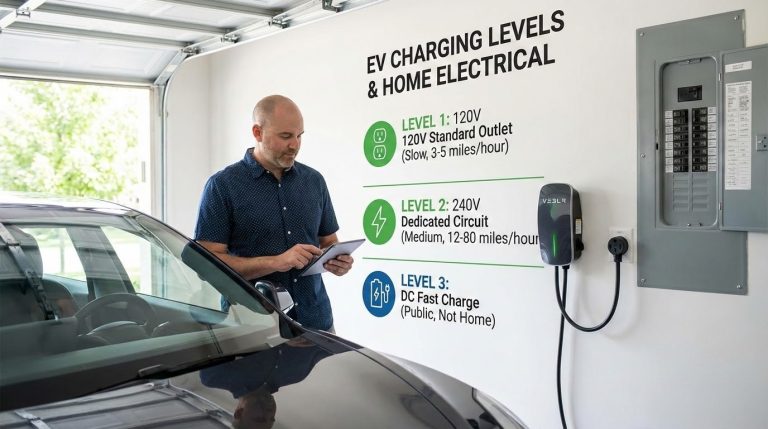
Level 1 Chargers: The Simple, Accessible Option
Level 1 charging uses a standard 120-volt AC outlet, the same as common household appliances. Every electric vehicle comes with a Level 1 charging cable, making it instantly available.
Charging Speed: Extremely slow, adding about 2-5 miles of range per hour. A full charge for many EVs could take over 24 hours.
Pros: Requires no special installation; simply plug into any existing outlet. It’s ideal for minimal daily driving or as a backup.
Cons: Too slow for most Los Angeles commuters. It often won’t fully recharge an EV overnight, especially if you drive considerable distances.
Level 2 Chargers: The Optimal Home Solution
Level 2 charging utilizes a 240-volt AC circuit, similar to an electric dryer or oven. This is the recommended EV charger for garage installation for the vast majority of EV owners in Los Angeles, balancing speed and convenience.
Charging Speed: Significantly faster, typically delivering 25-50 miles of range per hour. Most EVs can achieve a full charge overnight.
Pros: Offers an ideal blend of speed, cost-effectiveness, and convenience for residential use. It dramatically reduces charging times and supports daily commuting for all EV types.
Cons: Requires professional installation by a qualified electrician to set up a dedicated 240-volt circuit and possibly a NEMA 14-50 outlet or hardwiring. There is an upfront cost for the unit and installation.
Level 3 (DC Fast Chargers): Public Use Only
Level 3, or DC Fast Charging, is the quickest method, primarily found at public stations. It delivers direct current power directly to the EV’s battery.
Charging Speed: Extremely fast, capable of adding hundreds of miles of range in under an hour.
Pros: Essential for long road trips or quick top-ups away from home.
Cons: Not suitable or practical for residential garage installation. These units are prohibitively expensive and require massive electrical infrastructure upgrades, making them exclusively for commercial and public applications.
Why Home EV Charging is Essential for Los Angeles Drivers
For any electric vehicle owner in Los Angeles, a dedicated home charging station is a game-changer. It elevates the EV ownership experience from managing charging logistics to pure, effortless convenience.
The Unmatched Convenience of At-Home Charging
Picture this: You arrive home after navigating LA traffic, simply plug in your EV, and go about your evening. No detours, no waiting, no checking apps for available chargers. With a garage EV charger, your car is always fueled and ready. This convenience is invaluable in Los Angeles, where distances are long, and your time is precious.
Significant Cost Savings Over Public Charging Networks
Public charging stations, while necessary, often carry higher per-kWh costs than residential electricity. By charging at home, especially with a time-of-use (TOU) plan, you can dramatically cut your “fuel” expenses. Many Los Angeles residents can leverage lower off-peak rates overnight, making home EV charging an exceptionally economical choice in the long run.
Enhancing Your EV’s Battery Longevity
Regularly topping off your EV’s battery with a Level 2 charger is generally gentler on the battery than frequent reliance on DC fast charging. Consistent, controlled charging helps maintain battery health over time, safeguarding your investment. Your garage EV charging station provides this ideal charging environment.
Future-Proofing Your Los Angeles Home
As Los Angeles moves decisively toward a greener, all-electric future, the demand for EVs will only accelerate. Installing a dedicated EV charger in your garage is not just about present-day convenience; it’s a smart investment in your home’s future value and aligns with the city’s sustainable living initiatives. It positions your home as ready for the evolving electric landscape.
Choosing the Right EV Charger for Your Garage: Essential Considerations
With numerous Level 2 EV chargers available, selecting the perfect unit for your Los Angeles garage requires thoughtful consideration. Here’s what you need to evaluate.
Charging Speed and Power Output (Amperage)
Most Level 2 chargers offer adjustable amperage, typically from 16 to 48 amps. For most homeowners, a 32-amp to 48-amp charger is ideal, delivering excellent speed without overly expensive electrical upgrades. Align your choice with your EV’s maximum charging rate and your home’s electrical panel capacity for a seamless residential EV charger.
Plug-in vs. Hardwired Installation
This choice impacts flexibility and aesthetics for your home EV charger installation.
Plug-in Chargers (NEMA 14-50 or 6-50): These plug into a specialized 240-volt outlet. They offer flexibility, allowing you to easily move the charger if needed. The NEMA 14-50 is a common choice for home EV charger installation in LA.
Hardwired Chargers: Permanently connected to your home’s electrical system, these often support higher amperage (up to 80 amps) and offer a cleaner, integrated aesthetic. They are ideal for permanent installation and maximum power.
Cable Length and Connector Type
Ensure the charging cable is long enough (18-25 feet) to comfortably reach your EV’s charging port, regardless of how you park. The J1772 connector is standard for almost all EVs in North America (Tesla vehicles use an adapter). Select a durable, weather-resistant cable, essential for a functional garage EV charger.
“Smart” Features and Connectivity
Modern smart EV chargers offer sophisticated features that enhance convenience and optimize cost savings.
Wi-Fi Connectivity: Enables remote control, scheduling, and monitoring via a smartphone app. Charging Schedules: Program your charger to operate during off-peak utility hours, crucial for Los Angeles EV owners to save money. Energy Monitoring: Track your EV’s electricity consumption. Some integrate with Voice Assistant for control.
Durability and Safety Certifications
Prioritize chargers built for longevity and bearing recognized safety certifications (e.g., UL listed). Robust construction is important for garage environments. Safety is paramount when handling high-voltage electricity in your home, so choose a trusted brand for your residential EV charger.
Top EV Charger Brands for Los Angeles Homeowners
When searching for the best EV charger for garage installation in Los Angeles, certain brands consistently deliver quality, robust features, and excellent reliability. Here are some highly-rated options catering to LA residents.
ChargePoint Home Flex
A leading choice, the ChargePoint Home Flex offers flexible amperage settings (16A to 50A), allowing customization based on your home’s electrical capacity. It’s renowned for its intuitive app, advanced smart features, and durable build, making it a superb smart EV charger option for any Los Angeles garage.
Wallbox Pulsar Plus
Compact, powerful, and elegantly designed, the Wallbox Pulsar Plus is another strong contender. It delivers up to 48A charging, features a long 25-foot cable, and integrates seamlessly with its myWallbox app for smart control. Its small footprint is a significant advantage for garages with limited space, common in some LA neighborhoods.
Enel X Way JuiceBox 48
The JuiceBox 48 stands out as a powerful and intelligent charger, providing up to 48 amps. It offers robust Wi-Fi connectivity, smart grid capabilities, and detailed energy monitoring. This unit is a reliable option for those seeking maximum charging speed and sophisticated control over their home EV charging experience.
Grizzl-E Classic/Smart
The Grizzl-E is celebrated for its rugged, durable construction, designed to endure demanding conditions. It features adjustable amperage settings and is available in both a basic “Classic” and a Wi-Fi-enabled “Smart” version. Its no-frills reliability and robust build quality are frequently praised in EV charger reviews.
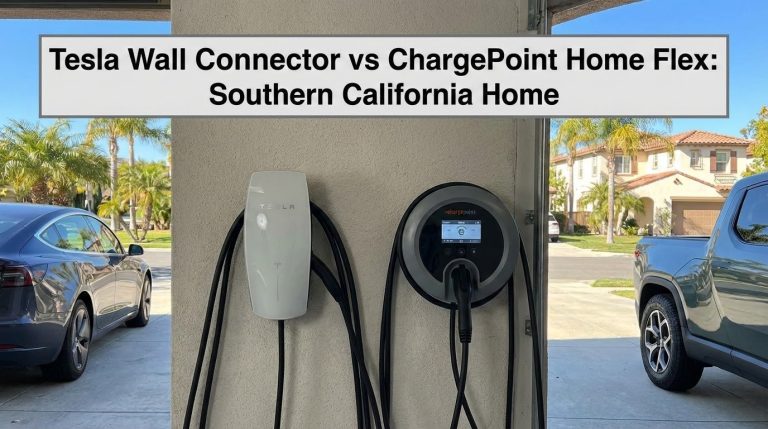
Tesla Wall Connector
Primarily designed for Tesla vehicles, the Tesla Wall Connector can also charge non-Tesla EVs with a J1772 adapter. It’s a high-performance charger delivering up to 48A, known for its sleek design. For homes with multiple EVs or a Tesla, it offers an integrated, aesthetically pleasing solution for your garage EV charger.
Installation Process: What to Expect When Setting Up Your EV Charger
Installing a Level 2 EV charger in your Los Angeles garage is a precise process best handled by a qualified electrician. Here’s a breakdown of the typical steps.
Electrical Panel Assessment
The initial step is a professional evaluation of your home’s electrical panel. Your electrician will determine if your existing panel can support a new 240-volt circuit. Many older homes in Los Angeles may require an electrical panel upgrade, affecting the overall EV charger installation cost. The electrician verifies the main breaker size and available space.
Wiring and Circuit Installation
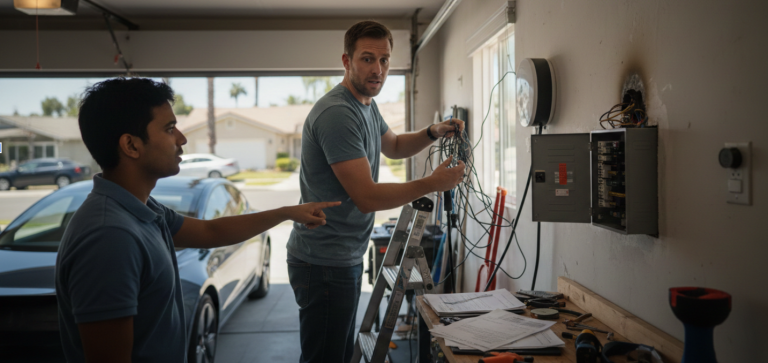
Once your panel’s capacity is confirmed, a dedicated 240-volt circuit will be run from the electrical panel to the charger’s desired location. This involves installing appropriate gauge wiring, a new circuit breaker, and either a NEMA 14-50 outlet or direct wiring. All work must meet local electrical codes for residential EV charger installation.
Charger Mounting and Final Testing
The EV charger unit will be securely mounted on a garage wall, typically near your parking spot. After mounting, the electrician connects the charger to the new circuit and performs comprehensive testing to ensure safe and correct operation. They will verify voltage, amperage, and proper ground fault protection.
The Importance of Professional Installation
Attempting a DIY installation of a Level 2 charger can be dangerous, violate local electrical codes, and void product warranties. Always hire a licensed, insured electrician with specific experience in EV charger installation in Los Angeles. They possess the expertise to navigate permits, inspections, and safety regulations, guaranteeing a correct and secure setup for your home EV charging system.
Navigating Permits, Incentives, and Local Regulations in LA
Understanding Los Angeles’s specific permitting requirements, available incentives, and local regulations can significantly streamline your EV charger installation project.
Los Angeles Permitting Requirements
Any substantial electrical work, including installing a 240-volt circuit for an EV charger, typically necessitates a permit from the Los Angeles Department of Building and Safety (LADBS). Your licensed electrician will usually manage the permit application and ensure the installation passes all required inspections, making your home EV charging setup fully compliant and safe.
Federal, State, and Local Incentives
Various incentives can substantially reduce the overall cost of installing an EV charger in your Los Angeles garage, making the transition even more financially attractive.
Federal Tax Credit: The federal government often provides a tax credit for purchasing and installing qualified residential clean energy property, which can include EV charging equipment. Consult a tax professional for current information.
California State Rebates: California offers various rebates to promote EV adoption and infrastructure. Look into programs like the California Electric Vehicle Infrastructure Project (CALeVIP) or other statewide initiatives.
Los Angeles Department of Water and Power (LADWP) Programs: LADWP frequently offers specific rebate programs for residential EV charger installation. These can cover the charger unit or necessary electrical upgrades. Always check the LADWP website for current offerings, as programs can change.
Time-of-Use (TOU) Electricity Plans
LADWP offers Time-of-Use (TOU) rate plans, charging different electricity rates based on the time of day. Enrolling in a TOU plan and programming your smart EV charger to charge during off-peak hours (usually overnight) can lead to considerable savings on your electricity bill. This strategy is a game-changer for Los Angeles EV owners aiming to maximize cost efficiency.
Maximizing Your EV Charging Efficiency and Savings
Once your garage EV charger is installed, several strategies can help you maximize its efficiency and generate significant cost savings.
Always Charge During Off-Peak Hours
Utilizing your utility’s Time-of-Use (TOU) rates is the most impactful way to save money. Most smart EV chargers allow you to schedule charging sessions. Set your charger to operate late at night when electricity rates are lowest, saving Los Angeles EV owners hundreds of dollars annually.
Monitor Your Charging Data
Many smart EV chargers include apps that provide detailed charging history and energy consumption data. Regularly reviewing this information helps you identify usage patterns, optimize schedules, and accurately estimate operational costs. Understanding your charging habits is key to highly efficient home EV charging.
Maintain Optimal Battery Charge (20% to 80%)
While modern EVs feature sophisticated battery management systems, a general best practice for extending battery longevity is to keep your daily charge level between 20% and 80%. Only charge to 100% when anticipating a long trip. Your residential EV charger makes it effortless to maintain this optimal range, contributing to your vehicle’s long-term health.
Regularly Inspect Your Charging System
Periodically check your charging cable and connector for any signs of wear, fraying, or damage. Ensure the charger unit itself is clean and unobstructed. If you notice flickering lights or unusual electrical behavior, promptly consult your electrician. Regular maintenance ensures the safety and longevity of your garage EV charger system.
Common Questions About Garage EV Charger Installation in Los Angeles
Here are answers to some frequently asked questions about installing an EV charger in your Los Angeles garage.
How much does it cost to install an EV charger in a Los Angeles garage?
The total EV charger installation cost in Los Angeles typically ranges from $800 to $2,500. This estimate includes the Level 2 charger unit ($400-$800) plus professional electrical installation. Factors influencing the final price include distance from your electrical panel, potential panel upgrades, and wiring complexity. Remember to account for potential rebates and tax credits, which can significantly offset these upfront costs for Los Angeles EV owners.
Do I need a permit for EV charger installation in Los Angeles?
Yes, for Level 2 EV charger installation in Los Angeles, an electrical permit from the Los Angeles Department of Building and Safety (LADBS) is almost always required. A licensed electrician will manage this permitting process on your behalf, ensuring the installation is safe and fully compliant with all local building codes. Installing without a proper permit could lead to fines, difficulties with home insurance, or safety hazards.
Can I install a Tesla charger for a non-Tesla EV in my Los Angeles garage?
Absolutely, yes! While Tesla Wall Connectors use a proprietary connector, every Tesla vehicle sold in North America comes with a J1772 adapter. This means you can easily purchase a readily available J1772-to-Tesla adapter, allowing your non-Tesla vehicle to charge efficiently using a Tesla Wall Connector in your garage. This provides excellent flexibility for multi-EV households.
How long does EV charger installation typically take in Los Angeles?
The actual on-site EV charger installation by a qualified electrician usually takes a few hours (3 to 6 hours for a standard setup). However, the entire process—from scheduling an electrician and obtaining permits to potential electrical panel upgrades—can extend from a few days to several weeks. Early planning is crucial to ensure a smooth and timely installation of your residential EV charger.
Will installing an EV charger significantly increase my electricity bill in Los Angeles?
Yes, your electricity bill will increase due to consuming more power to charge your vehicle. However, this increase is generally offset by savings on gasoline, often resulting in overall lower ‘fuel’ costs. The exact increase depends on driving habits, EV efficiency, and your specific electricity rates. By enrolling in LADWP’s Time-of-Use plans and scheduling charging during off-peak hours, you can significantly minimize this increase and make home EV charging highly economical.
Final Thoughts: Powering Your Electric Future in Los Angeles
Investing in a dedicated EV charger for your garage installation in Los Angeles is one of the most intelligent decisions you can make as an electric vehicle owner. It’s a foundational enhancement to your EV lifestyle, delivering unparalleled ease, substantial cost savings, and complete peace of mind. Bid farewell to range anxiety, and forget the frustrations of public charging—simply plug in at home and awaken to a fully charged vehicle, primed for whatever the vibrant city of LA has in store.
By understanding charging levels, considering your needs, exploring top-rated smart EV chargers, and navigating installation with a licensed professional, you are well on your path to a truly seamless electric future. Moreover, take full advantage of federal, state, and local incentives available to Los Angeles EV owners to make your installation even more affordable, embracing the electric revolution with unwavering confidence.