Are you dreaming of the convenience of charging your electric vehicle right at home, or perhaps offering charging solutions at your Orange County business? You’re not alone, as EV adoption surges across Southern California. But before you plug into that dream, consider this crucial question: Do you need a permit for EV charger installation in Orange County?
The answer, often surprisingly nuanced, can save you from costly fines, safety hazards, and significant headaches down the road. Understanding the local rules is not just a formality; it’s a vital step for a compliant and secure setup.
The transition to electric vehicles is accelerating, bringing with it not only environmental benefits but also practical considerations for infrastructure. For residents and small business owners in Orange County, installing an EV charger is a significant upgrade. It promises convenience, enhances property value, and aligns with a sustainable future.
However, embarking on this project without fully understanding the regulatory landscape can turn an exciting upgrade into a bureaucratic nightmare. This comprehensive guide will demystify the Orange County EV charger permit process, outlining the ‘what’ and ‘why’ behind these requirements and equipping you with the knowledge to ensure your installation is fully compliant, safe, and efficient.
Understanding the Basics of EV Charger Permits in Orange County
When you’re considering adding an electric vehicle charging station, whether it’s a Level 2 charger for your garage or multiple stations for a commercial property, the first step is always to inquire about permits. Many people assume it’s just a matter of buying the equipment and plugging it in, but that’s rarely the case, especially in a densely populated and regulated area like Orange County. Local jurisdictions have specific codes to ensure public safety and electrical integrity.
What Exactly is an EV Charger Permit?
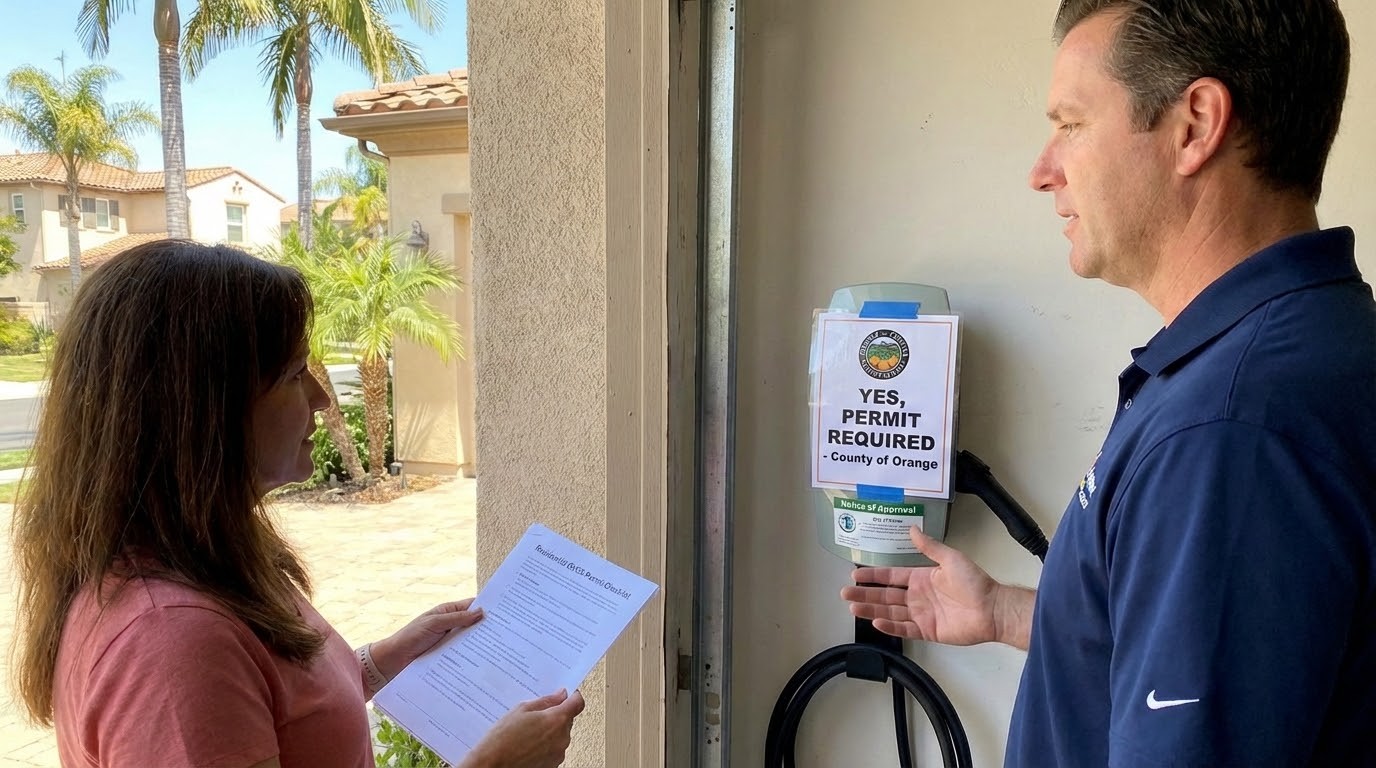
An EV charger permit is official authorization from your local Orange County building department (which could be the county itself or your specific city within Orange County, such as Irvine, Anaheim, or Newport Beach) that allows you to proceed with an electrical installation project. This permit signifies that your planned installation meets all local building, electrical, and zoning codes. It’s not just a piece of paper; it’s a commitment to safety and compliance, ensuring that licensed professionals oversee the work and that the final installation is inspected and approved.
Why Orange County Has Specific EV Charging Installation Rules
Orange County, like many parts of California, is at the forefront of EV adoption. This rapid growth necessitates clear, consistent, and safe installation guidelines. The rules are in place for several critical reasons, primarily focusing on public safety, electrical grid stability, and environmental protection. Local municipalities want to ensure that every EV charger installation is done correctly, minimizing risks like electrical fires, circuit overloads, or damage to property.
Why Permits are Non-Negotiable for EV Charger Installations
Skipping the permit process might seem like a shortcut, but it carries significant risks that far outweigh any perceived time or cost savings. Understanding the fundamental reasons behind permit requirements can help underscore their importance and encourage a compliant approach from the outset.
The Safety Imperative Behind Permits
The most crucial reason for securing an EV charger installation permit in Orange County is safety. Installing a Level 2 (240-volt) charger involves higher electrical loads than a standard outlet. Incorrect installation can pose serious hazards like electrical shocks, wiring overheating, or even fires. Permits ensure a licensed electrician performs the work, following strict safety protocols and local electrical code compliance. An inspector then verifies all connections, wiring, and protective devices, significantly reducing accident risks.
Protecting Your Investment and Property Value
A properly permitted EV charging station installation protects your valuable investment, both in the charger and your property. Unpermitted work can lead to major complications: potential buyers might flag it during a sale, requiring costly upgrades. Furthermore, many homeowner’s insurance policies may not cover damages or liabilities from unpermitted electrical work, potentially denying claims for electrical fires. Permits document professional standards, safeguarding your financial interests and enhancing property value.
Avoiding Penalties and Legal Complications
Orange County municipalities take code compliance seriously. Operating an unpermitted EV charger installation can lead to significant penalties, including daily fines or being forced to remove the entire installation. Cities may issue stop-work orders if construction is discovered without permits. Adhering to the Orange County EV regulations ensures you avoid these stressful and costly legal battles, providing peace of mind that your charging solution is fully legitimate and recognized by local authorities.
Navigating the Permit Application Process in Orange County
While the permit process can seem daunting, breaking it down into manageable steps makes it much easier to tackle. Each city within Orange County might have slightly different procedures, but the core requirements remain largely consistent.
Step-by-Step: Preparing Your Permit Application
The first step in obtaining your EV charger permit in Orange County is preparation. Here’s a general roadmap:
- Identify Your Jurisdiction: Determine if your property falls under the county’s jurisdiction or a specific city’s building department.
- Understand Local Requirements: Visit your local building department’s website for specific checklists.
- Gather Necessary Information: This includes property address, charger location, electrical panel specs, and charger type.
- Engage a Qualified Electrician: A licensed electrician should prepare drawings and submit the application. They ensure plans meet code and navigate the process efficiently.
- Complete the Application Form: Fill out the permit application form accurately.
- Submit Plans and Documents: Submit your application with electrical and site plans. Many jurisdictions allow online submissions.
Required Documents for Orange County EV Charger Permits
While specific documents may vary, you can generally expect to provide the following for your EV charger installation permit:
- Permit Application Form: Completed and signed.
- Site Plan: A simple drawing showing property boundaries, existing structures, and the proposed location of the EV charger, main service panel, and conduit runs.
- Electrical Plans/Drawings: Detailed schematics prepared by a licensed electrician, including a one-line diagram, load calculations for your existing electrical panel, and compliance with NEC.
- Manufacturer Specifications: Product information for the specific EV charger model.
- Proof of Contractor License and Insurance: If a contractor is doing the work.
Understanding Local Zoning and Electrical Codes
Beyond general building codes, your EV charger installation must comply with local zoning ordinances and electrical codes. Zoning laws might dictate charger placement, especially if visible from the street or impacting setbacks. Electrical code compliance is paramount, adhering to the latest National Electrical Code (NEC) with California and local Orange County city amendments. An electrician ensures proper wire sizing, conduit type, grounding, and overcurrent protection, considering potential service panel upgrades.
Specific Rules for Residential EV Charger Installations
Residential installations often face a unique set of considerations compared to commercial projects, largely revolving around existing home infrastructure and homeowner association (HOA) rules.
Permit Requirements for Single-Family Homes
For single-family homes in Orange County, an electrical permit is typically required for EV charger installation. Key points of concern include:
- Electrical Panel Capacity: Ensure your existing panel can handle the additional load of a Level 2 charger (30-80 amps). A service panel upgrade may be needed.
- Dedicated Circuit: Level 2 chargers require a dedicated 240-volt circuit.
- Wiring and Conduit: Proper sizing and protection for wiring.
- Location: Accessible and safe, typically in a garage, carport, or approved outdoor spot.
Multi-Unit Dwellings and HOA Considerations
Installing an EV charger in a multi-unit dwelling (MUD) involves navigating city/county permits and Homeowner Association (HOA) rules. California law (AB 2565 and AB 1732) generally prevents HOAs from unreasonably prohibiting EV charging installations, but they can impose reasonable restrictions on location and appearance, and require specific insurance. Before starting, you must:
- Review HOA Covenants: Understand rules for exterior modifications.
- Submit an HOA Application: Provide detailed plans for approval.
- Coordinate with Property Management: For renters, work with your landlord to secure necessary approvals before seeking a municipal permit.
Key Considerations for Commercial EV Charger Installations in Orange County
For businesses looking to offer EV charging, projects are typically larger, leading to more extensive permit requirements and additional regulations.
Large-Scale EV Charging Infrastructure for Businesses
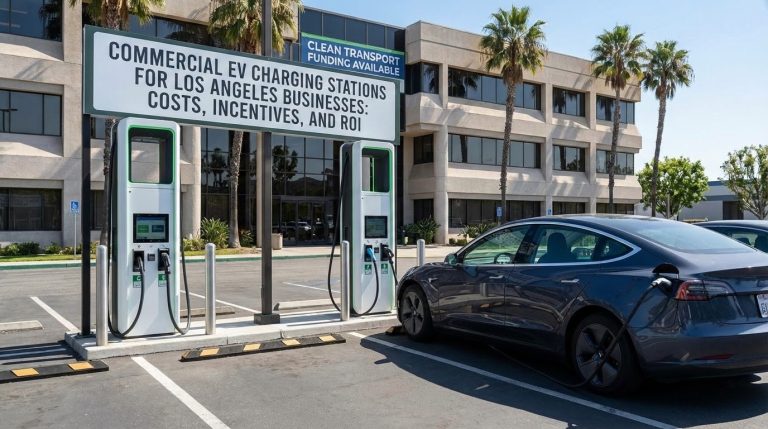
Commercial EV charger installations in Orange County often involve multiple stations and higher power outputs (Level 3 DC fast chargers), requiring comprehensive electrical engineering plans and site plan reviews. Key considerations include:
- Utility Coordination: Work closely with your utility (e.g., Southern California Edison) for service upgrades.
- Parking Lot Modifications: Trenching, new concrete, and restriping may require civil engineering permits.
- Load Management Systems: Integrate smart load management systems for EV charging to optimize power use and avoid costly service upgrades.
Accessibility Standards (ADA) for Commercial Chargers
A critical aspect of commercial EV charger installation in Orange County is compliance with the Americans with Disabilities Act (ADA). Businesses providing public charging must ensure a percentage of stations, parking spaces, and pathways are accessible. This includes requirements for:
- Accessible Parking Spaces: Specific dimensions, striping, and signage.
- Path of Travel: Clear, unobstructed paths to the charging station.
- Charging Equipment Height: Operable parts must be within accessible reach.
- Cable Management: Systems for easy and safe handling of charging cables.
The Inspection Process: Ensuring Your EV Charger is Code Compliant
Obtaining the permit is just the first step. The installation must then pass inspection by the local building department to ensure it adheres to the approved plans and all applicable codes. This is where the commitment to safety and quality is truly verified.
What to Expect During the Electrical Inspection
Once your licensed electrician completes the EV charger installation in Orange County, they will schedule the final inspection. An inspector typically looks for:
- Permit Display: The permit card posted prominently.
- Workmanship: Quality of electrical work, secure and professional.
- Code Compliance: Verification of wiring, conduit, breakers, and grounding per NEC and local amendments.
- Dedicated Circuit: Confirmation of a dedicated 240-volt circuit.
- Load Calculations: Ensuring the electrical panel capacity.
- Proper Labeling: Clear labeling for circuits and charger.
- GFCI Protection: Checked for outdoor locations.
- Physical Location: Charger installed as per approved plans.
Common Reasons for Permit Delays or Rejection
While a smooth process is the goal, delays or rejections can occur. Common pitfalls include:
- Incomplete Applications: Missing information or unsigned forms.
- Insufficient Electrical Plans: Lack of detail or incorrect load calculations.
- Underestimated Panel Capacity: Existing panel cannot support the new load.
- Non-Compliant Installation: Deviations from approved plans or code.
- Lack of HOA Approval: For MUDs, proceeding without HOA consent.
- Unlicensed Installer: DIY or unlicensed work will lead to denial.
Avoiding Common Pitfalls in Your EV Charger Installation Project
Proactive planning and smart decision-making can significantly streamline your EV charger installation journey in Orange County.
Hiring a Qualified and Licensed Electrician
Always hire a licensed and insured electrician experienced with EV charger installations. A qualified professional will:
- Understand Local Codes: Familiarity with Orange County’s electrical and building codes.
- Perform Accurate Load Calculations: Assess panel capacity and recommend upgrades.
- Design Compliant Systems: Create electrical plans that meet permit requirements.
- Handle the Permit Process: Manage application and inspection scheduling.
- Ensure Safety: Guarantee a safe, reliable, and compliant installation.
Budgeting for Permit Fees and Installation Costs
When planning your project, factor in all costs, not just the charger. EV charger permit fees in Orange County vary by city and scope, typically ranging from a few hundred dollars for residential to several thousand for commercial projects. Beyond permit fees, budget for:
- Electrician’s Labor: Often the largest cost.
- Materials: Wiring, conduit, breakers, and the charger itself.
- Electrical Panel Upgrades: A significant expense if required.
- Contingency: Always set aside 10-15% for unforeseen issues.
Many homeowners and businesses are also eligible for various EV charger rebates and incentives (federal and state), which can significantly offset installation costs.
Ensuring Long-Term Compliance and Safety
Once your EV charger is installed and inspected in Orange County, maintaining its long-term compliance and safety is crucial. This involves:
- Regular Maintenance: Keep the area clear and check for wear.
- Monitoring Performance: Address unusual sounds, smells, or frequent trips immediately with an electrician.
- Staying Informed: Be aware of evolving codes and safety recommendations.
Frequently Asked Questions About EV Charger Permits in Orange County
How long does an EV charger permit take in Orange County?
The timeline for obtaining an EV charger permit in Orange County varies by city, project complexity, and building department workload. A straightforward residential Level 2 charger review might take a few days to 2-4 weeks. More complex commercial projects or those requiring engineering reviews could take 4-8 weeks or longer. Online submission and pre-approved plans can help expedite the process. Always factor in potential delays.
What happens if I install an EV charger without a permit?
Installing an EV charger without a permit in Orange County can lead to serious consequences. If discovered, you could face hefty fines, potentially increasing daily, and a “stop-work” order. You would likely be required to apply for a permit retroactively, incurring additional fees or penalties. You might even have to expose or remove the installation for inspection, resulting in significant costs. Unpermitted work can also void insurance policies and create property sale issues.
Are all EV chargers regulated the same way?
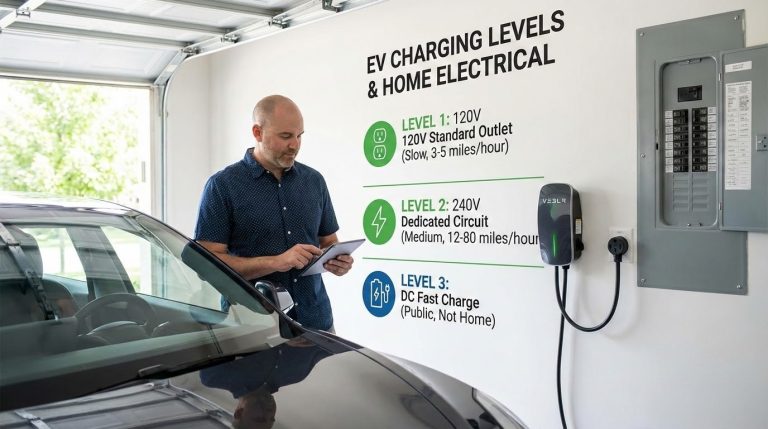
No, not all EV chargers are regulated the same way. Permit requirements largely depend on the “level” of charging. Level 1 chargers (standard 120-volt outlets) typically don’t require a permit if using an existing outlet. However, Level 2 (240-volt) and Level 3 (DC fast charging) installations almost always require permits due to significant electrical modifications and higher power draws. Level 2 residential permits are generally simpler than Level 3 commercial permits, which have more extensive electrical, civil, and ADA compliance requirements. Always consult your local Orange County building department.
Can I do the installation myself, or do I need a professional?
For EV charger installation in Orange County, it is highly recommended, and often legally required, to use a licensed and insured electrician. Most building departments require permit applications for electrical work, especially those involving 240-volt circuits or panel upgrades, to be submitted by a licensed electrical contractor. An inspector will expect professional standards. Hiring a professional ensures safety, compliance, proper functionality, and protects your investment and liability.
What are the typical costs associated with EV charger permits?
The cost of an EV charger permit in Orange County varies by city and scope. For a standard residential Level 2 charger, fees typically range from $100 to $400, covering administrative processing and inspections. If an electrical panel upgrade is required, fees might be slightly higher due to increased complexity. Commercial projects with multiple chargers or extensive site modifications will have significantly higher permit fees, potentially ranging from several hundred to thousands of dollars, reflecting the more extensive review and multiple inspections.
Driving Towards a Greener Future: Your Next Steps
Installing an EV charger in Orange County is a fantastic investment, offering unparalleled convenience and contributing to a sustainable future. However, navigating the local regulations is a critical first step that should not be overlooked. From the basic electrical permit for a single-family home to the complex ADA-compliant installations for a business, understanding the Orange County EV charger permit rules ensures your project is safe, compliant, and protects your investment for years to come. Charge forward with confidence and peace of mind.