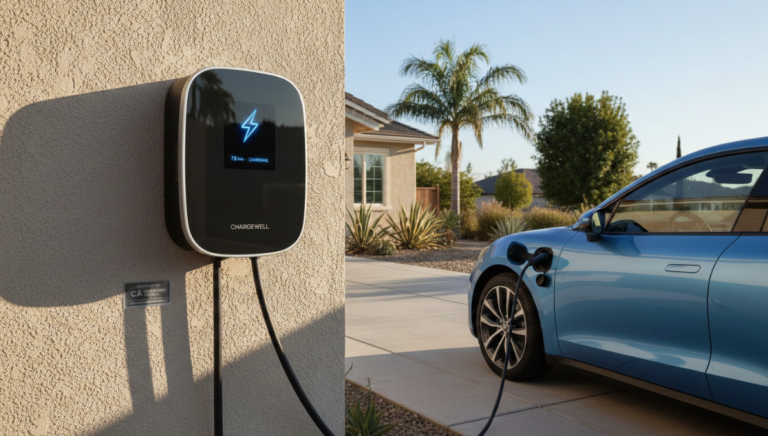
Imagine waking up every morning with a full “tank” for your electric vehicle, ready to tackle Southern California’s bustling freeways or scenic coastal drives. This isn’t just a dream; it’s the daily reality for countless EV owners. Choosing the right home charging solution is crucial for your lifestyle. Let’s find the perfect fit for your Southern California residence.
The electric vehicle revolution is transforming transportation across Southern California. As more residents embrace EVs, demand for efficient home charging has skyrocketed. The decision often comes down to the sleek Tesla Wall Connector or the versatile ChargePoint Home Flex. Understanding their distinct advantages is crucial for an informed choice that enhances your electric driving experience.
Understanding the Core of Home EV Charging in Southern California
Why Dedicated Home EV Charging is a Game-Changer for Southern California Drivers
A dedicated Level 2 home charger transforms daily routines for any EV owner in Southern California. Enjoy unparalleled convenience: plug in overnight and wake up to a fully charged battery. Home charging also reduces operating costs, especially with Southern California’s time-of-use (TOU) electricity plans, offering cheaper off-peak rates.
Key Considerations for Choosing Your Ideal EV Charger in a Southern California Setting
Selecting the right EV charger means aligning technology with your needs, vehicle, and home. Key factors include charging speed (kW/amps), compatibility (J1772 standard vs. Tesla), and smart features like Wi-Fi for energy savings. Consider total cost, including installation and local Southern California rebate programs, and future-proofing your investment.
Diving Deep into the Tesla Wall Connector for Your Southern California Home
Unpacking the Design and Core Functionality of the Tesla Wall Connector
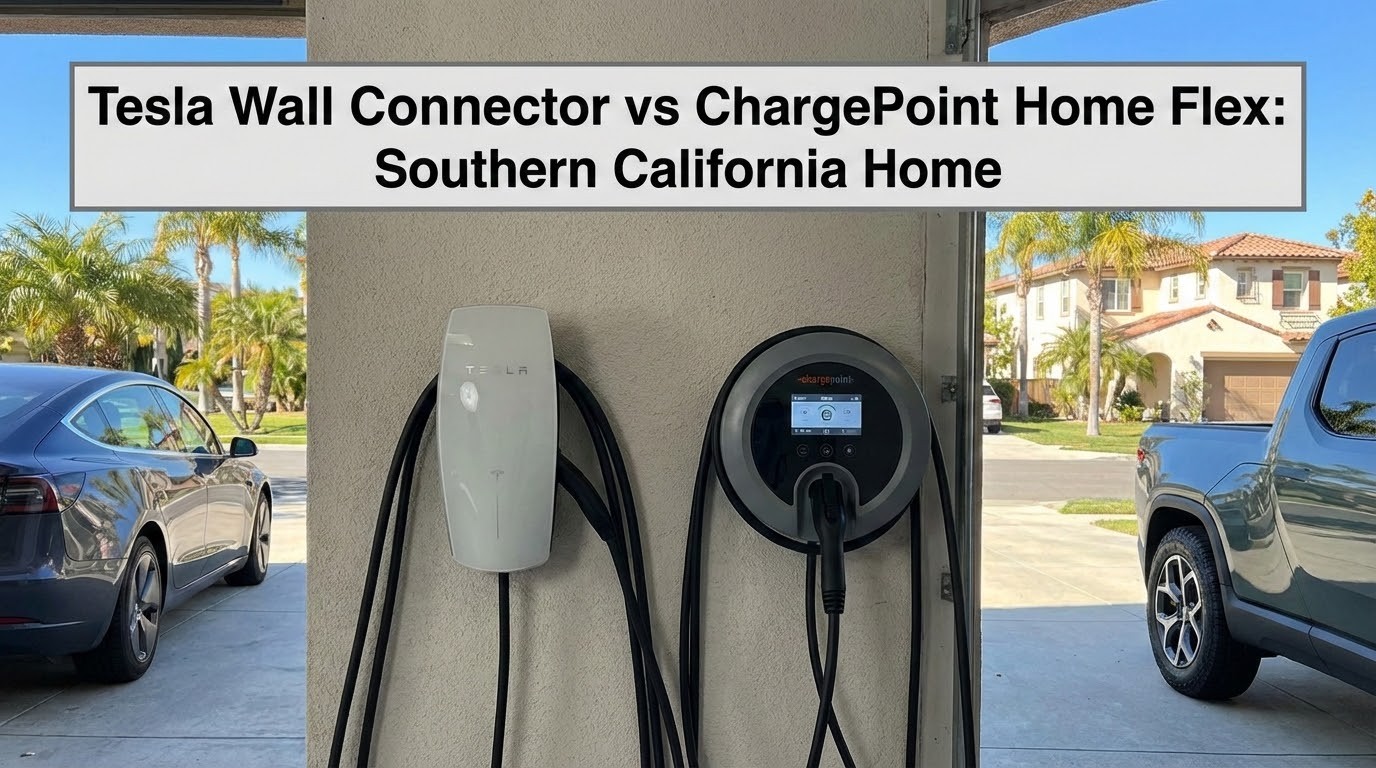
The Tesla Wall Connector is known for its minimalist design and powerful capabilities. While optimized for Tesla, the latest generation offers a J1772 adapter for wider compatibility. This sleek unit delivers up to 11.5 kW (48 amps), adding roughly 44 miles of range per hour. Its robust construction suits both indoor and outdoor installation, ideal for Southern California’s microclimates.
Installation Specifics and Electrical Requirements for Tesla Wall Connector in Southern California
The Tesla Wall Connector is typically hardwired by a licensed electrician. This often requires a dedicated 60-amp circuit, potentially necessitating an electrical panel upgrade in older Southern California homes. Permitting is critical in most areas for compliance with local electrical codes. A professional electrician ensures a safe, compliant setup.
Unique Advantages and Potential Drawbacks of the Tesla Wall Connector for SoCal Homeowners
Its primary advantage is seamless integration with Tesla vehicles, offering a “plug and charge” experience. The elegant design and robust build ensure reliability. However, its smart features are more limited than competitors, focusing on power delivery. Hardwired installation can lead to a higher initial cost if an electrical panel upgrade is needed.
Real-World Experience: A Tesla Owner’s Perspective on Charging at Home
Sarah, an Irvine tech professional, drives a Tesla Model 3. “Before the Wall Connector, I constantly worried about charging,” she recalls. “Now, I just plug it in and it’s fully charged by morning.” She appreciates the simplicity: “No app, no settings; it just works. It’s incredibly convenient for my busy schedule and drives throughout Southern California.”
Exploring the ChargePoint Home Flex for Diverse Southern California EV Owners
Discovering the Versatility and Smart Features of the ChargePoint Home Flex
The ChargePoint Home Flex offers exceptional versatility and robust smart features. It comes standard with the universal J1772 connector, compatible with virtually every EV, including Teslas with their adapter. This home EV charger adjusts from 16 to 50 amps (up to 12 kW). Its strength lies in Wi-Fi connectivity and mobile app for smart scheduling and energy tracking, optimizing costs and convenience.
Flexible Installation Options and Electrical Considerations for ChargePoint Home Flex
A key advantage of the ChargePoint Home Flex is flexible installation: hardwired or plugged into a NEMA 14-50 outlet. The NEMA 14-50 option is often simpler and cheaper if an outlet is available. This makes it popular for renters or those moving within Southern California. It operates on circuits from 20 to 60 amps. Professional installation by a licensed electrician is always recommended.
Distinct Benefits and Considerations for ChargePoint Home Flex Users in Southern California
The ChargePoint Home Flex benefits Southern California homeowners with its universal J1772 connector, ideal for multi-EV households. Its extensive smart features, via the ChargePoint app, include scheduling charges during off-peak hours to save on rates from Southern California Edison (SCE) or San Diego Gas & Electric (SDG&E). This control allows for significant cost savings and optimal energy management.
Real-World Experience: The Eco-Conscious Family in Santa Monica and Their ChargePoint Home Flex
The Chen family in Santa Monica installed a ChargePoint Home Flex for their Nissan LEAF and Hyundai IONIQ 5. David says, “We set it to charge only during lowest off-peak hours via the app.” Maria adds, “Notifications are great; I know when charging is complete. It gives us peace of mind about our energy consumption here in Southern California.”
A Head-to-Head Comparison: Tesla Wall Connector vs. ChargePoint Home Flex in Southern California
Charging Speed and Power Output: Matching Your Needs to Your Lifestyle
Both are robust Level 2 chargers. The Tesla Wall Connector delivers up to 48 amps (11.5 kW), adding about 44 miles/hour. The ChargePoint Home Flex is versatile, adjustable from 16 to 50 amps (up to 12 kW), also delivering up to 48 miles/hour at max. Both easily replenish daily mileage overnight. The Home Flex’s adjustable amperage better adapts to existing electrical infrastructure.
Smart Features and Connectivity: Beyond Just Plugging In
The ChargePoint Home Flex excels with advanced Wi-Fi connectivity and its comprehensive app. It offers precise scheduling, real-time energy usage tracking, and smart home integration, invaluable for maximizing savings with Southern California’s TOU electricity rates. The Tesla Wall Connector provides a simpler “plug and charge” experience, lacking ChargePoint’s detailed energy management.
Installation Complexity and Overall Cost: Understanding Your Investment in Southern California
Total cost includes unit price and installation. The Tesla Wall Connector unit is $400-$500; installation $500-$1,500+ for hardwiring. The ChargePoint Home Flex unit is $600-$800; NEMA 14-50 plug installation $300-$800, or similar hardwiring. Older Southern California homes needing an electrical panel upgrade for either could exceed $2,500. Always get multiple quotes from licensed Southern California electricians.
Vehicle Compatibility and Future-Proofing Your Home Charging Setup
For Tesla owners, the Wall Connector offers seamless integration, now with a J1772 adapter for non-Teslas. However, the ChargePoint Home Flex, with its standard J1772 connector, offers superior universal compatibility out of the box. This makes the Home Flex more future-proof for diverse EV brands or those planning to switch, maintaining your home EV charging infrastructure’s relevance.
Safety Features and Reliability: Peace of Mind for Your Southern California Home
Both chargers boast robust safety features and meet stringent industry standards, offering peace of mind. Both are UL listed. They prevent overcurrent, overheating, and ground faults. Their durable construction suits indoor and outdoor environments. Professionally installed according to local Southern California codes, both units offer reliable and safe charging for your electric vehicle.
Maximizing Your EV Charging Investment with Southern California Incentives
Navigating Southern California’s Rebate Programs for EV Chargers
Installing an EV charger in Southern California can be significantly offset by various incentives. Utilities like Southern California Edison (SCE) and San Diego Gas & Electric (SDG&E) frequently offer rebates. Check your specific utility’s website and explore potential federal tax credits. These programs can substantially reduce your out-of-pocket expenses for your home EV charger.
Leveraging Off-Peak Charging Rates for Significant Savings
Southern California’s utilities operate on Time-of-Use (TOU) electricity plans, with “off-peak” hours offering the lowest rates. Smart chargers like the ChargePoint Home Flex help capitalize on these savings by scheduling charging during off-peak times. Even Tesla vehicles can charge off-peak via their software. This strategy dramatically reduces your monthly electricity bill for EV charging.
Making the Right Choice: Actionable Steps for Southern California Homeowners
Step 1: Assess Your Current and Future Electric Vehicle Needs
Consider your current and future EVs. If you anticipate switching brands or adding another EV, a universally compatible charger like the ChargePoint Home Flex offers more flexibility. If you’re a dedicated Tesla owner, the Wall Connector is a strong contender. Think about daily driving and charging routines.
Step 2: Evaluate Your Home’s Electrical Infrastructure and Budget
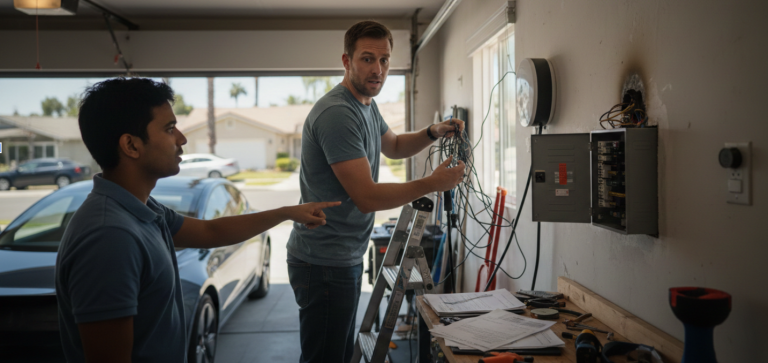
Consult a licensed electrician in Southern California. They’ll assess your electrical panel capacity, determine if upgrades are needed, and estimate installation costs for hardwired or NEMA 14-50 options. Understand the total financial investment, including unit, installation, and upgrades, before committing. Your budget ceiling will help narrow options.
Step 3: Prioritize Smart Features and Connectivity for Your Lifestyle
Determine your desired level of control. If you want detailed usage tracking, off-peak scheduling for maximum savings, and smart home integration, the ChargePoint Home Flex will appeal. For a simpler “plug and charge” experience, the Tesla Wall Connector might be your choice. Your preference for digital control versus minimalist simplicity is key.
Step 4: Research Local Rebates and Utility Programs in Southern California
Before purchasing, research available EV charger rebates and incentives from your specific Southern California utility provider (SCE, SDG&E) and federal tax credits. These programs significantly reduce out-of-pocket expenses. Check eligibility, deadlines, and preferred models. Maximizing these incentives is a smart financial move for your home EV charger.
Step 5: Seek Professional Installation for Safety and Compliance
Regardless of your choice, professional installation by a licensed electrician is paramount. This ensures your charger is installed safely, correctly, and in full compliance with all local electrical codes and permitting requirements across Southern California. A professional will properly size the circuit, install wiring, and troubleshoot. Never attempt to install a Level 2 EV charger yourself.
Frequently Asked Questions About EV Charging in Southern California
How much does it typically cost to install a home EV charger in Southern California?
Costs range from $700 to $2,500+, including the charger ($400-$800). Variables include distance from the electrical panel, need for an electrical panel upgrade, and wiring complexity. Always get detailed quotes from several licensed Southern California electricians.
Can I install a Tesla Wall Connector if I don’t own a Tesla vehicle?
Yes, the latest Tesla Wall Connector includes an optional J1772 adapter. This enables it to charge most non-Tesla EVs using the universal J1772 standard. It offers powerful Level 2 charging for your Southern California home, regardless of your EV brand.
What are the main differences between Level 1, Level 2, and DC Fast Charging?
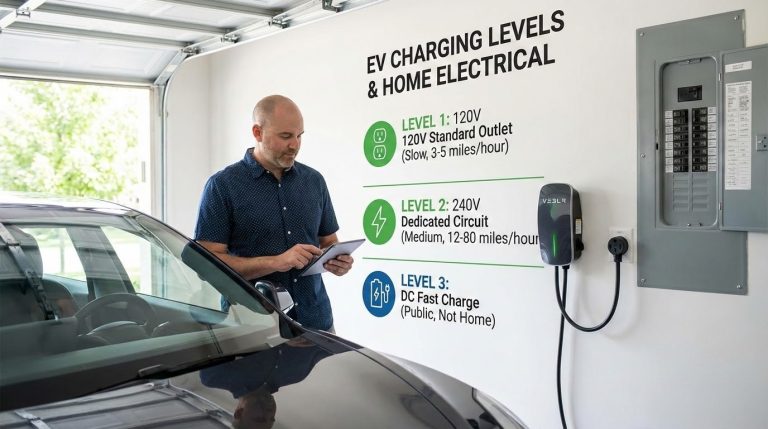
Level 1 charging (120V) is slowest (2-5 miles/hour). Level 2 charging (240V), like both chargers discussed, adds 20-60 miles/hour, ideal for home. DC Fast Charging (DCFC) is fastest (hundreds of miles/hour), found at public stations, not for home installation.
Will installing an EV charger significantly increase my electricity bill in Southern California?
Yes, but the increase can be managed. Utilize Southern California’s Time-of-Use (TOU) electricity plans by scheduling charges during off-peak hours for lower rates. Smart chargers like ChargePoint Home Flex automate this. Many find home charging considerably cheaper per mile than gasoline, leading to overall savings.
Are there any specific permits required for EV charger installation in my Southern California city?
Yes, permits are required in virtually all Southern California cities for Level 2 EV charger installation. This ensures compliance with local electrical codes for safety. A licensed electrician will handle the permit application and inspection. Installation without a permit carries risks and penalties.
Final Thoughts: Powering Your Southern California EV Journey
Choosing between the Tesla Wall Connector and the ChargePoint Home Flex for your Southern California home depends on your specific needs. If you’re a dedicated Tesla owner valuing seamless integration, the Wall Connector is an elegant solution.
For non-Tesla EVs, future compatibility, and extensive smart features like precise scheduling and energy tracking, the Home Flex is a versatile choice. Always assess your home’s electrical infrastructure, research Southern California rebate programs, and prioritize professional installation. Both chargers offer the convenience and peace of mind of reliable home EV charging.