Imagine the freedom of waking up every morning to a fully charged electric vehicle, ready to tackle your day without a single stop at a gas station. This dream is a reality for millions of EV owners, but choosing the right home charging setup can feel like navigating a maze. Are you wondering if the sleek Tesla Wall Connector is your only option, or if a versatile NEMA 14-50 outlet could be a smarter, more flexible choice for your garage? The decision impacts not just your charging speed, but also your wallet, your home’s electrical system, and your long-term convenience.
The Core Question: Powering Your Electric Vehicle at Home
Understanding the ‘What and Why’ of Home EV Charging
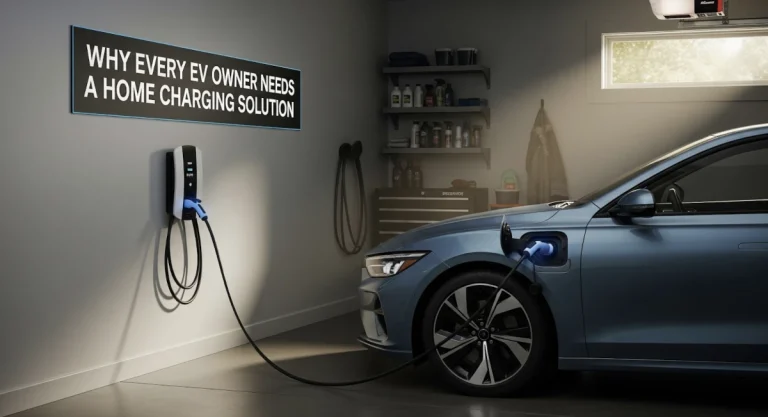
As the electric vehicle revolution accelerates, many homeowners are embracing EV ownership. A crucial consideration is how to keep their vehicle charged reliably and efficiently at home. This isn’t just about saving time; it ensures your EV seamlessly integrates into your lifestyle, always ready for daily commutes or adventures.
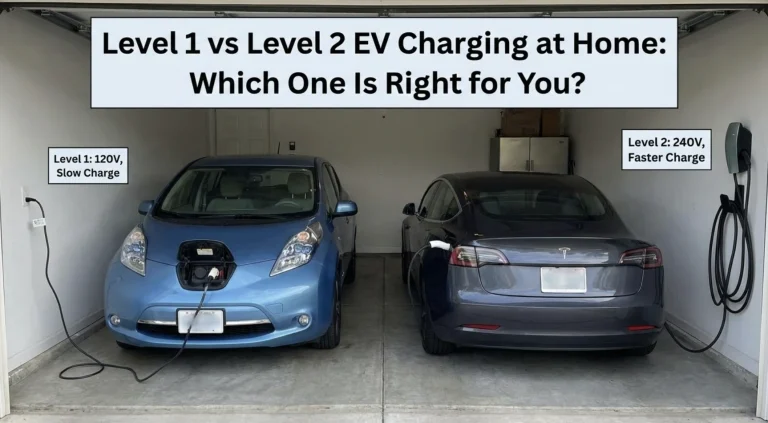
For Tesla owners, two prominent Level 2 (240-volt) home EV charging options stand out: the dedicated Tesla Wall Connector and the adaptable NEMA 14-50 outlet. Both significantly reduce charge times compared to standard outlets. Understanding their distinct features, benefits, and considerations—including installation, cost, and functionality—is key to making an informed decision for your Tesla charger setup.
Unveiling the Tesla Wall Connector: A Dedicated Charging Solution
What Exactly is a Tesla Wall Connector and How Does it Work?
The Tesla Wall Connector is a proprietary Level 2 charging unit designed primarily for Tesla vehicles, though it can charge other EVs with an adapter. This sleek, wall-mounted device connects directly to your home’s 240-volt electrical system. As a permanent fixture in your garage, it offers a dedicated, high-power EV charging solution.
When plugged in, the Wall Connector communicates with your Tesla’s onboard charger for efficient power delivery. It typically installs on a 60-amp circuit, providing up to 48 amps of power. This setup offers significantly faster Tesla home charging speeds and integrates smart features like scheduled charging.
The Distinct Advantages of Choosing a Tesla Wall Connector
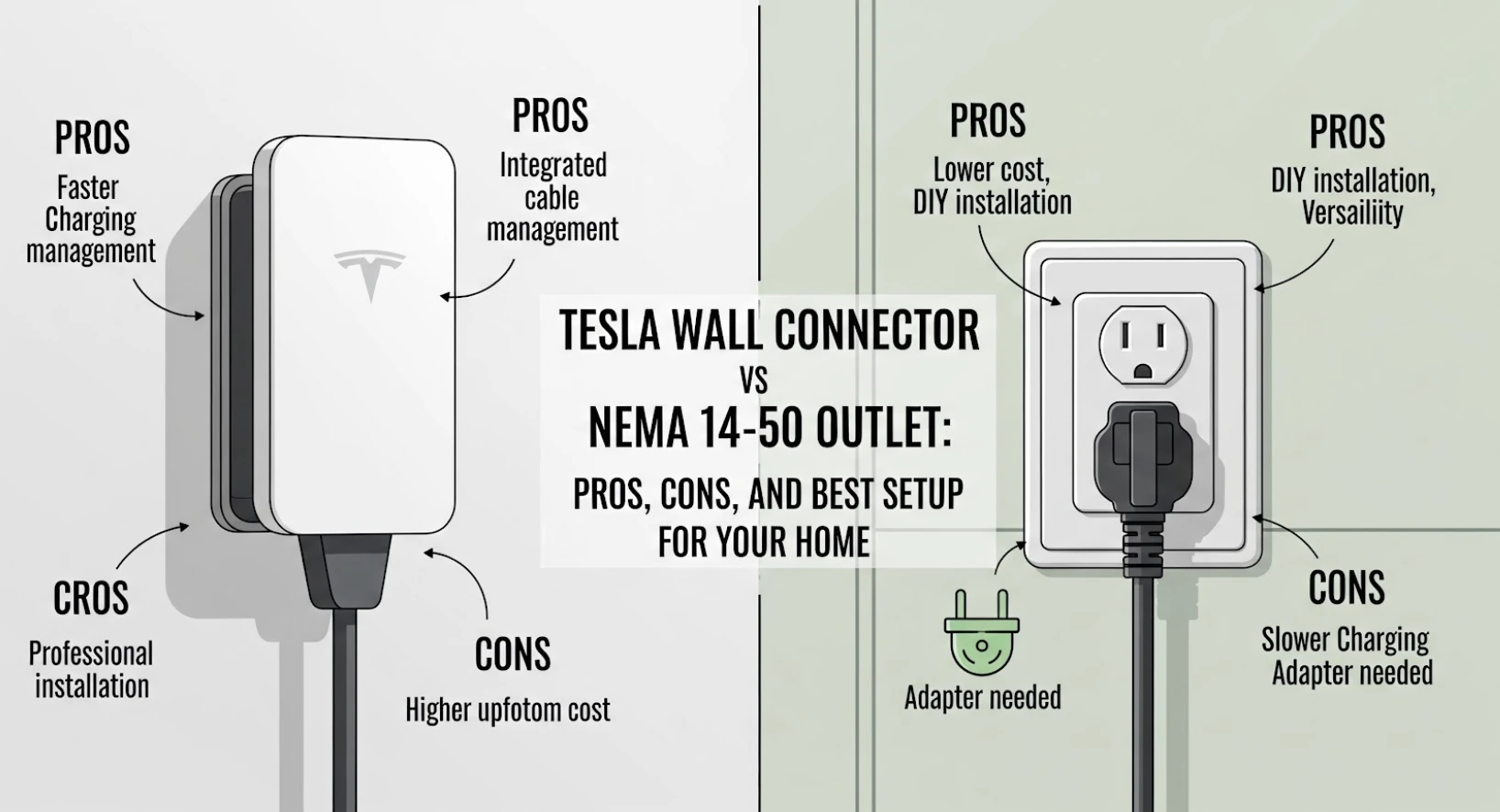
Opting for a Tesla Wall Connector offers several compelling benefits, especially for Tesla enthusiasts. Its primary advantage is superior charging speed. On a dedicated 60-amp circuit, it delivers up to 48 amps, adding approximately 44 miles of range per hour. This allows most Tesla models to fully recharge overnight, ensuring maximum convenience for daily use and longer drives.
Another significant benefit is its seamless integration and smart features. The Wall Connector works harmoniously with your Tesla vehicle and the Tesla app. This enables advanced functionalities like scheduling charging during off-peak hours to save on electricity costs, remote monitoring, and power sharing for multiple Teslas. Its durable, weatherproof design and integrated cable management also enhance its appeal as a premium home EV charger.
Considering the Downsides: Potential Cons of the Tesla Wall Connector
While offering many advantages, the Tesla Wall Connector has potential drawbacks. The most significant is its higher upfront cost, particularly for installation. The unit itself is pricier than a basic NEMA 14-50 outlet. The true cost often lies in the electrical work, requiring a dedicated 240-volt, 60-amp circuit. This may necessitate an upgrade to your home’s electrical panel, adding hundreds or even thousands to the total installation cost, depending on your existing infrastructure.
Another point is its brand specificity. While usable with other EVs via a J1772 adapter (purchased separately), its optimization is for Teslas. If you anticipate owning a non-Tesla EV or already have a mixed fleet, this dedicated nature might be less flexible. The proprietary connector means an adapter is always needed for other vehicles. The permanence of installation is also a minor con; moving homes requires professional uninstallation and reinstallation, adding hassle and expense.
Exploring the NEMA 14-50 Outlet: A Versatile Powerhouse
Understanding the NEMA 14-50 Outlet for EV Charging
The NEMA 14-50 outlet is a heavy-duty, 240-volt electrical receptacle, commonly used for electric ovens or RV hookups. For electric vehicle charging, it acts as a robust power source for your vehicle’s mobile connector or a third-party Level 2 EVSE (Electric Vehicle Supply Equipment). Unlike a dedicated charging unit, the NEMA 14-50 provides the powerful outlet itself.
When a Tesla owner chooses a NEMA 14-50, they typically use the Tesla Mobile Connector with its 14-50 adapter. This combination enables Level 2 charging, a significant power boost over standard 120-volt outlets. Installed on a dedicated 50-amp circuit, it provides up to 40 amps of power, a common and effective standard for home EV charging across all brands.
The Clear Benefits of Installing a NEMA 14-50 Outlet for Your EV
The NEMA 14-50 outlet truly excels in versatility and universal compatibility. This is its most compelling advantage for EV owners. As a standard electrical outlet, it can power any electric vehicle charger that uses a NEMA 14-50 plug. If you switch to a different EV brand in the future, your charging infrastructure remains fully compatible.
Another significant benefit is the lower upfront cost and simpler installation in many cases. While still requiring a dedicated 240-volt circuit, the cost of the outlet and components is typically less than a dedicated Wall Connector. If your panel has sufficient capacity, installation by a qualified electrician is straightforward and often results in a lower overall expense. Furthermore, the portability of the charging setup is a major plus. You can unplug your portable EVSE and take it with you when traveling, offering invaluable flexibility.
Potential Drawbacks to Weigh with the NEMA 14-50 Outlet
While highly versatile, the NEMA 14-50 outlet has a few limitations compared to a dedicated Wall Connector. The primary one is slightly slower charging speed. On a 50-amp circuit, it typically delivers up to 40 amps of continuous power due to electrical code requirements. This translates to about 30-35 miles of range per hour, less than the 44 miles per hour from a 48-amp Wall Connector. For some users, this speed difference is negligible, but for high-mileage drivers, every mile per hour counts.
Another consideration is the lack of integrated smart features directly from the outlet. The intelligence resides in the mobile connector or third-party EVSE plugged into it. While many quality third-party chargers offer Wi-Fi, app control, and scheduled charging, these are not inherent to the NEMA 14-50 outlet itself. Finally, repeated plugging and unplugging a heavy mobile connector can lead to wear on the outlet over many years. The setup might also appear less “clean” than a hardwired Wall Connector, with a separate cable and connector box.
A Head-to-Head Comparison: Tesla Wall Connector vs. NEMA 14-50
Charging Speed and Efficiency: Which Option Fuels Your Tesla Faster?
When considering Tesla home charging, speed is a key factor. The Tesla Wall Connector, on a 60-amp circuit, delivers up to 48 amps. This adds approximately 44 miles of range per hour for a Tesla Model 3 Long Range or Model Y. This is the fastest Level 2 charging you can achieve at home, enabling full overnight charges and rapid top-offs.
In contrast, the NEMA 14-50 outlet, on a 50-amp circuit, is limited to a continuous draw of 40 amps due to safety standards. This provides roughly 30-35 miles of range per hour for the same Tesla models. While significantly faster than Level 1 (3-5 miles per hour), it is perceptibly slower than the Wall Connector. For most daily drivers, this difference is minor, but high-mileage users might benefit more from the Wall Connector’s speed.
Installation Complexity and Cost: What to Expect from Your Electrician
Installation cost is a significant part of setting up home EV charging. Both the Tesla Wall Connector and a NEMA 14-50 outlet require a dedicated 240-volt circuit from your electrical panel by a licensed electrician. Costs depend on distance, trenching needs, and your panel’s capacity.
For a NEMA 14-50 installation, a new 50-amp circuit might cost $500 to $1,500 if your panel has spare capacity. The outlet itself is inexpensive. For the Wall Connector’s maximum 48-amp output, a 60-amp circuit is needed. This higher amperage can necessitate a panel upgrade, pushing Tesla Wall Connector cost into the $1,500 to $3,000+ range. Always get multiple quotes from qualified electricians specializing in EV charger installations.
Smart Features and Ecosystem Integration: Beyond Just Plugging In
Modern EV charging includes smart features and ecosystem integration. The Tesla Wall Connector excels here with native Wi-Fi connectivity. It communicates directly with your Tesla and the Tesla app, enabling advanced features like power sharing for multiple Teslas to prevent overloading. You can also schedule charging, view history, and receive software updates.
For a NEMA 14-50 outlet, “smartness” comes from the EVSE you plug in. Many third-party Level 2 chargers offer robust smart features like Wi-Fi, app control, and energy monitoring. These features are specific to the charger chosen, not the outlet. While you can achieve a smart charging experience with a 14-50, it requires selecting a smart EVSE, whereas the Wall Connector has these capabilities built-in as part of the Tesla ecosystem.
Future-Proofing Your Home Charging Setup: Long-Term Considerations
Future-proofing your EV charging setup is crucial. The NEMA 14-50 outlet offers excellent long-term versatility due to its universal compatibility. As the EV market grows, a standard 14-50 outlet will power any EVSE adhering to industry standards, offering peace of mind if you switch EV brands or acquire a second non-Tesla EV.
The Tesla Wall Connector, while optimized for Teslas, offers future-proofing within the Tesla ecosystem, especially with power-sharing. However, its proprietary connector means a non-Tesla EV requires an adapter. While Tesla now offers NACS (North American Charging Standard) universal adapters, the Wall Connector itself remains Tesla-specific. Ultimately, the NEMA 14-50 provides broader future compatibility across the entire EV market, while the Wall Connector excels within the Tesla brand.
Choosing Your Champion: Best Setup Scenarios for Different Needs
Scenario 1: The Dedicated Tesla Enthusiast Seeking Maximum Convenience
If you are a dedicated Tesla owner prioritizing the fastest home charging, seamless integration, and a clean installation, the Tesla Wall Connector is likely your best choice. This option suits those who own only Teslas, anticipate multiple Teslas, drive long distances daily requiring rapid recharging, or simply desire the most premium and integrated experience. The added installation cost is often seen as a worthwhile investment for the ultimate Tesla charging setup.
Scenario 2: The Budget-Conscious Driver Desiring Versatility
For the EV owner mindful of upfront costs, prioritizing universal compatibility, or considering non-Tesla EVs, the NEMA 14-50 outlet is a compelling solution. This setup is ideal if you seek a cost-effective Level 2 charging option, value the flexibility to charge any EV brand (via its mobile connector), appreciate equipment portability, or already have a 14-50 outlet. It offers excellent charging performance at a typically lower overall investment.
Scenario 3: The Multi-EV Household or Future-Oriented Homeowner
For households with multiple EVs or those concerned about adapting to evolving EV technology, a nuanced approach is best. For multi-Tesla homes, multiple Tesla Wall Connectors with power sharing are elegant. If your household mixes Tesla and non-Tesla EVs, a NEMA 14-50 outlet alongside a universal smart EVSE offers maximum flexibility. This allows any vehicle to plug in, and many smart EVSEs provide load management. Some homeowners combine both: a Wall Connector for their primary Tesla and a NEMA 14-50 for other vehicles or guests. Always consult an electrician regarding panel capacity for multiple chargers.
Actionable Steps: Setting Up Your Home EV Charging System
Step 1: Assess Your Electrical Panel and Home Capacity
Before deciding on any home EV charger, understand your electrical infrastructure. Know your main electrical panel’s amperage (e.g., 100-amp, 200-amp) and available spare capacity. A 240-volt Level 2 charger requires a dedicated circuit. A qualified electrician can perform a load calculation to determine if your panel can handle the additional demand. If not, a panel upgrade may be necessary for safe and reliable charging.
Step 2: Understand Your Driving Habits and Charging Needs
Your daily driving routine significantly influences the charging speed you need. Consider how many miles you typically drive each day. Most EVs get 3-4 miles of range per kilowatt-hour (kWh). If you drive 40 miles daily, even a 40-amp NEMA 14-50 can replenish this in an hour or two overnight. Don’t overspend on speed you don’t truly need; assess your actual daily requirements.
Step 3: Get Professional Installation Quotes for Both Options
Once your needs and panel capacity are clear, contact at least three licensed electricians experienced with EV charger installations. Request detailed quotes for both a Tesla Wall Connector (at maximum output if desired) and a NEMA 14-50 outlet. Ensure quotes include labor, materials, and permits. Compare not just price, but also inclusions, warranty, and experience. Professional installation is crucial for safety and code compliance.
Step 4: Explore Local Incentives and Rebates for EV Chargers
Don’t overlook potential savings! Many federal, state, local governments, and utility companies offer incentives or rebates for installing EV charging equipment. The federal tax credit, for instance, can cover a percentage of eligible equipment and installation costs. Check with your utility provider, state energy office, and city government websites for programs that could significantly reduce your out-of-pocket expenses.
Frequently Asked Questions About Home EV Charging
How long does it typically take to charge a Tesla from empty with each option?
Charging times depend on your Tesla model’s battery size. For a 75 kWh Tesla (like Model 3 Long Range or Model Y): a Tesla Wall Connector (48 amps) takes about 8-10 hours from empty to full. A NEMA 14-50 outlet (40 amps) takes slightly longer, typically 10-12 hours for a full charge. These are overnight durations, ensuring a full battery by morning.
Can I use a Tesla Wall Connector to charge other electric vehicles?
Yes, you can. The Tesla Wall Connector uses the NACS connector. To charge a non-Tesla EV, you need a NACS to J1772 adapter. J1772 is the universal charging standard for most other North American EVs. These adapters are widely available, allowing your Wall Connector to serve other EVs in your household or visiting friends.
Is it safe to leave my EV plugged in overnight with either setup?
Absolutely, it is completely safe to leave your electric vehicle plugged in overnight with both a Tesla Wall Connector and a NEMA 14-50 outlet. Modern EVs have sophisticated battery management systems (BMS) that prevent overcharging. Once the battery reaches its set charge limit, the vehicle stops drawing power. It’s often recommended to keep your EV plugged in at home for optimal battery temperature and readiness.
What kind of electrician should I hire for the installation?
It is crucial to hire a licensed and insured electrician with specific experience in electric vehicle charger installations. Look for electricians who advertise EV charger services. They will be familiar with high-power 240-volt circuits, local electrical codes, and the unique needs of EV charging equipment. Always ask for references or examples of previous EV charger installations to ensure their expertise.
Will installing an EV charger significantly increase my electricity bill?
Yes, your electricity bill will increase, as you are now “fueling” from home. However, the cost per mile is typically much lower than gasoline. The actual increase depends on your driving habits, EV efficiency, and local electricity rates. Many utility companies offer time-of-use (TOU) plans with lower off-peak rates. Scheduling charging during these times can significantly reduce the cost.
Making the Smart Choice for Your Tesla and Your Home
Selecting the perfect home EV charging solution, whether it’s the dedicated Tesla Wall Connector or the versatile NEMA 14-50 outlet, requires aligning your priorities with your home and budget. The Wall Connector excels in speed and Tesla ecosystem integration, offering a premium experience. The NEMA 14-50 stands out for its universal compatibility, lower typical installation cost, and flexibility, making it a robust and future-proof choice.
Remember, there’s no single “best” option; only the best fit for your unique situation. Consider your daily driving needs, budget, desire for smart features, and long-term EV ownership plans. Both options provide excellent Level 2 charging, making daily EV ownership a breeze.
Ready to power your electric future with confidence? Take the next step by assessing your home’s electrical capacity, understanding your driving habits, and gathering quotes from licensed professionals. By doing your homework and consulting with experts, you can make an informed decision that will serve you well for years to come, ensuring your electric vehicle is always charged and ready for your next adventure.