Are you excited about bringing home a new electric vehicle, but suddenly overwhelmed by thoughts of your home’s electrical system? Is your existing electrical panel robust enough to handle the demands of fast, efficient EV charging, or are you headed for frustrating delays and unexpected costs? Many EV owners find themselves asking these exact questions, often realizing too late that their dreams of convenient home charging might first require a significant electrical overhaul. Don’t let this be your story; understanding your electrical panel now can save you time, money, and headaches down the road, ensuring a smooth transition to electrifying your ride.
Unlocking Your EV Charging Potential: What Your Electrical Panel Means for Your Electric Vehicle
Bringing an electric vehicle (EV) into your home promises convenience and efficiency. However, a crucial piece often overlooked is your home’s electrical panel. This central hub dictates how much electricity can safely be delivered, including to a powerful EV charger. Understanding its capacity is key for safety, efficiency, and avoiding costly surprises.
For many new EV owners, the idea of “just plugging it in” quickly gives way to realizing that Level 2 chargers, which provide significantly faster charging, demand substantial power. This guide offers a simple checklist to help you understand if your electrical panel is ready for an EV charger, empowering you to make informed decisions before installation.
Understanding Your Electrical Panel: The Basics of Home Power Capacity
What is an Electrical Panel and Why Does It Matter for EV Charging?
Your electrical panel, also called a service panel or breaker box, is the main distribution point for all electricity in your home. It’s a grey metal box, usually found in your basement, garage, or utility room. Inside are circuit breakers, each protecting a specific circuit from overcurrent.
For EV charging, your panel’s capacity is paramount. A Level 2 EV charger needs a dedicated circuit, meaning its own breaker and wiring directly from the panel. If your panel lacks overall capacity or available space for a new, high-amperage circuit, it cannot safely support an EV charger without risking frequent trips or electrical hazards.
Common Amperage Ratings and What They Mean for Your Home’s Power Capacity
Every electrical panel has a main breaker that determines the maximum amperage it can safely handle for the entire home. This rating indicates your home’s total home power capacity. Common main breaker ratings include:
- 100-amp panels: Often in older or smaller homes, a 100-amp panel might struggle with a powerful Level 2 EV charger, especially with other high-demand appliances. It often requires an electrical service upgrade for Level 2 charging.
- 150-amp panels: Offering more flexibility, these panels are common in homes with a moderate number of modern appliances. Depending on your existing electrical load, a 150-amp panel might have enough headroom for a Level 2 EV charger, though a professional load calculation is highly recommended.
- 200-amp panels: Standard in most new builds and renovated properties, a 200-amp panel typically provides ample home power capacity. It can often easily integrate a Level 2 EV charger without needing an electrical upgrade, offering the most flexibility.
The higher the amperage rating, the more electricity your home can draw simultaneously. For an EV charger, which can require 20 to 80 amps, understanding your panel’s main rating is the first critical step.
The EV Charger Spectrum: Matching Power to Your Needs
Before assessing your panel, understand the electrical demands of different EV charger types.
Level 1 Charging: Simple Plugs, Minimal Panel Impact
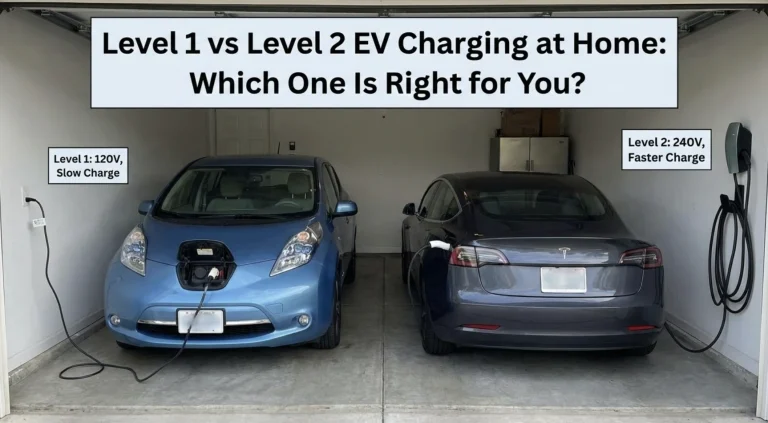
Level 1 charging uses a standard 120-volt household outlet. Most EVs include a portable Level 1 charging cord. It’s the slowest option, adding about 2-5 miles of range per hour, suitable for overnight charging if you don’t drive long distances. A Level 1 charger typically doesn’t require special electrical work or panel upgrades, drawing about 12-16 amps from an existing general-purpose circuit.
Level 2 Charging: Faster Speeds, Higher Panel Demands
This is the focus for most daily EV charging. Level 2 chargers use a 240-volt circuit, similar to an electric clothes dryer. They add 20 to 60 miles of range per hour, significantly reducing charging times. Installing a Level 2 charger typically requires a new, dedicated 240V circuit with its own circuit breaker, usually rated between 20 and 80 amps. This higher demand makes your electrical panel’s capacity and available space critical considerations.
Why Level 3 (DC Fast Charging) Isn’t for Homes and What That Means for Your Panel
Level 3 charging, or DC fast charging, is extremely powerful and provides the quickest charge. However, these chargers are designed for commercial and public use, not residential homes. The electrical infrastructure needed for Level 3 chargers is far beyond what a typical residential electrical panel can provide. Therefore, your panel’s capacity only needs to be assessed for Level 1 or Level 2 charging.
Your Simple Checklist: How to Assess Your Electrical Panel for an EV Charger
Ready to assess your electrical panel’s readiness? Follow this step-by-step checklist. Remember, this is for assessment only; leave opening the panel to a qualified electrician.
Locating and Identifying Your Electrical Service Panel
First, find your electrical panel. It’s usually a grey metal box, 1-2 feet wide and 2-3 feet tall, often in a basement, garage, utility closet, or on an exterior wall. Do not open it. Your goal is to locate it and identify the main breaker if visible. Note its proximity to your planned EV parking spot, as distance affects installation costs.
Checking Your Panel’s Main Breaker Amperage Rating
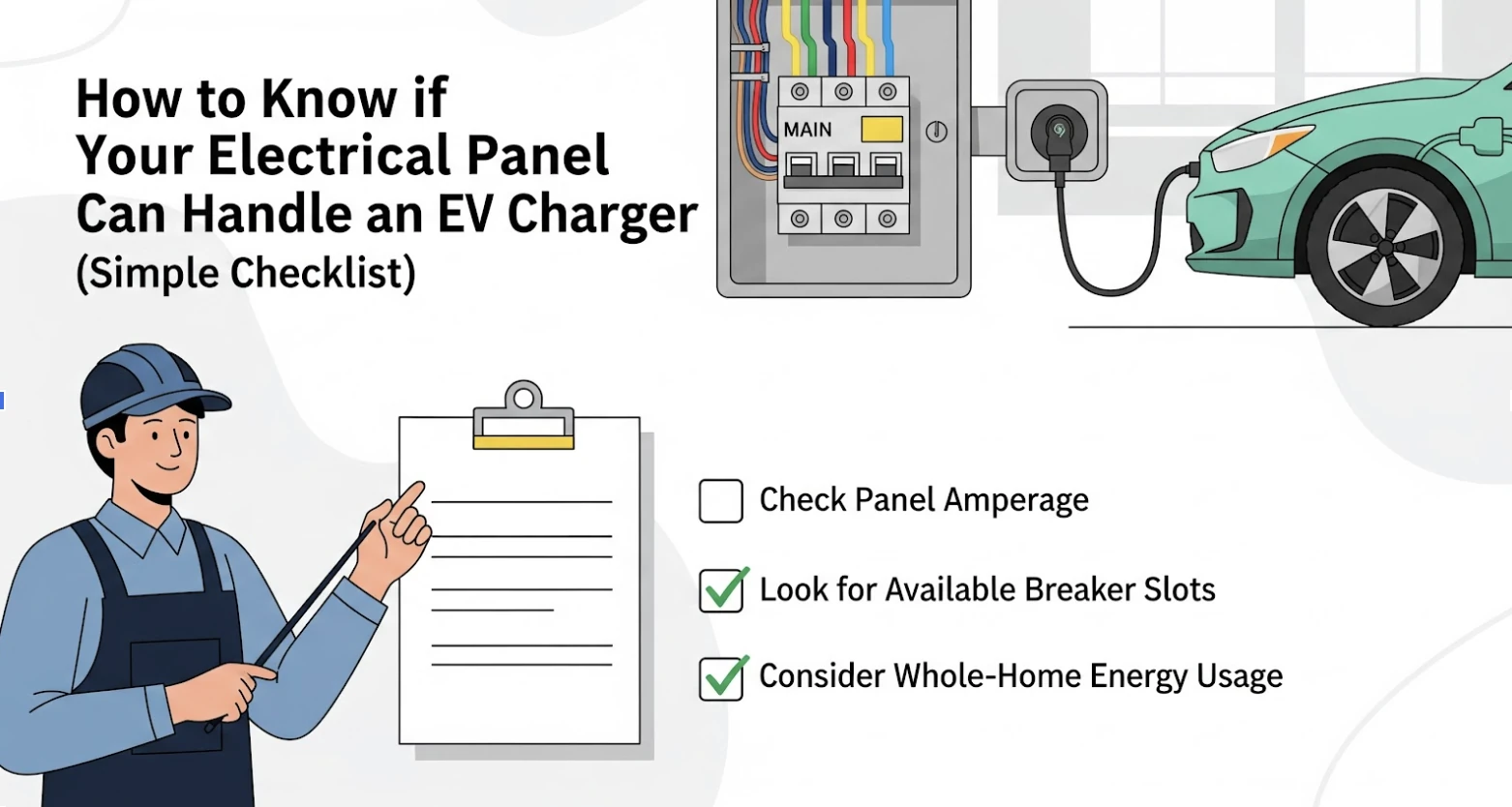
Look at the very top of your breaker box. You should see a large, typically double-pole main breaker that controls all power to your home. On this breaker, there will be a number (e.g., 100, 150, 200) indicating your panel’s maximum amperage rating. Make a note of this number; this is your home power capacity baseline.
Assessing Available Space in Your Breaker Box
Without opening the panel, visually inspect the rows of circuit breakers. Are there any empty slots? An empty slot is where a new circuit breaker can be installed. For a Level 2 EV charger, you’ll need one double-pole slot (equivalent to two single-pole breakers side-by-side) for the 240V circuit. If your panel looks full, an electrician might be able to create space by replacing two single-pole breakers with a “tandem” or “slimline” breaker, but this isn’t always possible. Note if your panel is full or has empty slots.
Considering Your Home’s Existing Electrical Load: The ‘Load Calculation’ Principle
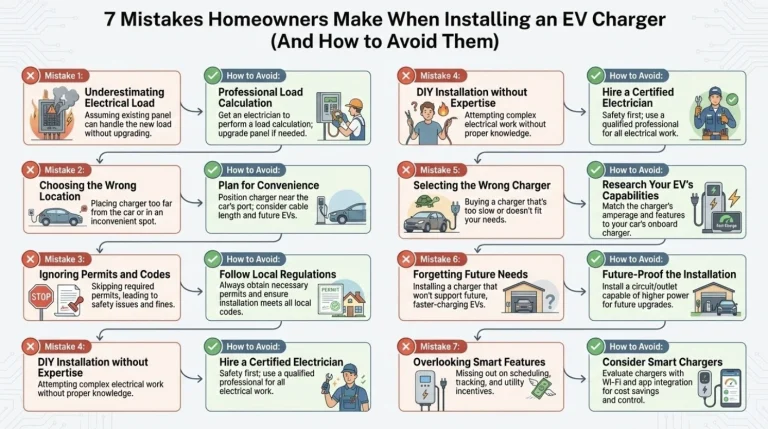
Even with a high amperage rating and available slots, you must consider your home’s existing electrical load. This is often tricky for homeowners to assess without an electrician. A load calculation is a formal assessment by an electrician that determines how much power your home’s existing appliances (HVAC, water heater, oven, dryer, etc.) typically draw. The EV charger’s demand must fit within the remaining unused capacity. Make a list of your major electrical appliances for your initial assessment.
Looking for Obvious Signs of an Outdated or Overloaded Panel
Observe your home’s electrical behavior for signs your current system might be struggling. These indicate an outdated or overloaded panel needing attention, regardless of an EV charger:
- Flickering or dimming lights when large appliances turn on.
- Frequent tripping of circuit breakers (not due to specific overloaded appliances).
- Buzzing sounds from the electrical panel.
- Scorch marks or a burning smell near the panel or outlets (contact an electrician immediately).
- Outlets that feel warm to the touch. Any of these signs suggest your electrical system is at its limits and likely requires professional inspection and potential upgrades before adding an EV charger.
Potential Scenarios and What They Mean for You
Based on your checklist, here’s what your findings might indicate for your EV charger installation.
Scenario 1: You Have Ample Capacity and Space
You have a 200-amp main breaker (or 150-amp with few other heavy electrical loads) and at least two empty adjacent slots in your breaker box. This is ideal. Your home likely has sufficient home power capacity for a Level 2 EV charging station without needing a significant electrical upgrade. Your next step: Contact a licensed electrician specializing in EV charger installations. They will perform a professional load calculation to confirm capacity and ensure safe, code-compliant installation of the new dedicated circuit.
Scenario 2: Limited Space, Adequate Amperage
You have a 150-amp or 200-amp main breaker, indicating good home power capacity, but your breaker box appears full. Your total power capacity might be fine, but you lack physical space for a new circuit breaker. Potential solutions: An electrician might install “tandem” or “half-size” breakers to create space. Another option is a smart load management device. These monitor your home’s overall electrical usage and dynamically adjust power to your EV charger, potentially avoiding a costly electrical panel upgrade.
Scenario 3: Insufficient Amperage and/or Outdated Panel
You have an older 100-amp main breaker, or your panel shows signs of age or overloading. Your existing electrical system likely doesn’t have enough home power capacity for a Level 2 EV charger in addition to current demands. What this means: You will almost certainly need an electrical service upgrade. This involves replacing your entire electrical panel with a new one of higher amperage (e.g., 100 amps to 200 amps). This is a more substantial project, requiring significant electrical work, permitting, and inspection, but it modernizes your home’s electrical system.
Beyond the Panel: Other Critical Considerations for EV Charger Installation
Your electrical panel is the foundation, but a few other factors are vital for a smooth EV charging station setup.
Permitting and Local Electrical Codes: Why They Matter for Safety and Compliance
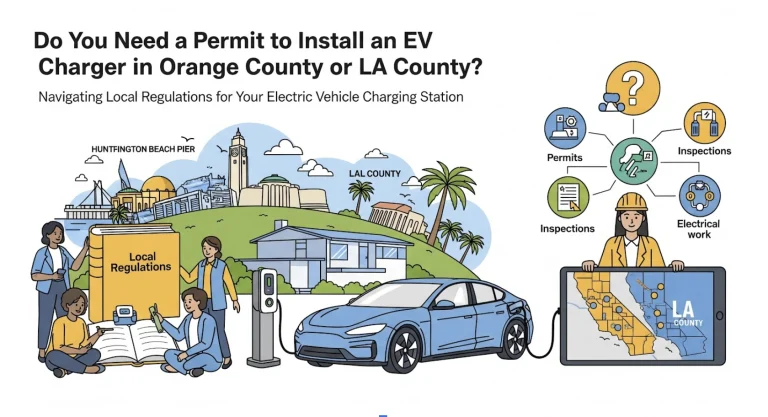
Any electrical work involving a new dedicated circuit or a panel upgrade typically requires a permit from your local municipality. These permits ensure work is performed by qualified individuals (licensed electricians) and meets strict local and national electrical codes. Skipping permits can lead to safety hazards, insurance issues, and future difficulties. Always insist your electrician handles all necessary permits and inspections.
Choosing the Right EV Charger for Your Car and Lifestyle
Once your panel is ready, select the right EV charging station. Consider:
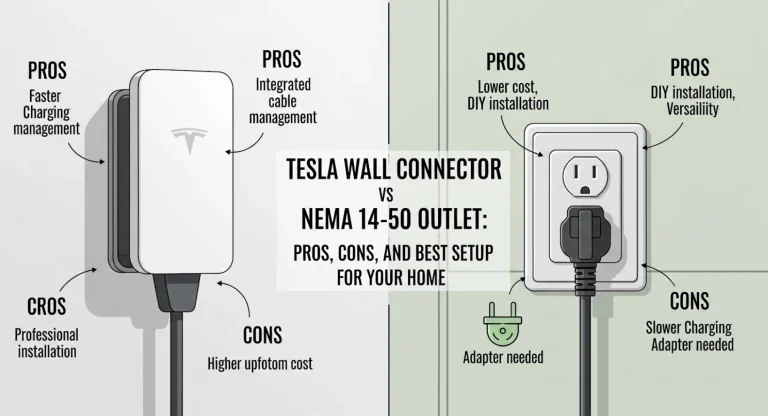
- Connector Type: Most EVs use a J1772 connector; Teslas use proprietary connectors but often come with an adapter.
- Amperage Output: Match the charger’s amperage (e.g., 32A, 40A, 48A) to your EV’s max charging rate and your panel capacity.
- Smart Features: Many modern chargers offer Wi-Fi, app control, scheduling, and energy monitoring.
- Cord Length: Ensure the cable comfortably reaches your EV.
The Importance of Professional Installation: Don’t DIY Your EV Charger
DO NOT ATTEMPT TO INSTALL A LEVEL 2 EV CHARGER OR PERFORM PANEL WORK YOURSELF UNLESS YOU ARE A LICENSED ELECTRICIAN. Working with high-voltage electricity is extremely dangerous. A licensed, insured electrician will ensure safety, comply with codes, optimize performance, and protect your investment.
Real-Life Scenario: Navigating an Electrical Panel Upgrade
Sarah, a small business owner, recently bought an electric SUV. Her 1980s home had a 100-amp electrical panel. She noticed flickering lights and a full panel, so she called a licensed electrician. The electrician confirmed her existing load calculation, including central AC and an electric stove, consumed most available capacity. Adding a 30-amp Level 2 charger would overload her system. The electrician recommended an electrical service upgrade to a 200-amp panel. Though an unexpected expense, Sarah considered it a worthwhile investment. The upgrade allowed safe installation of her Level 2 EV charging station and prepared her home for future electrical demands. The process, including permitting, took about two days of physical work, followed by inspections. Sarah now charges her EV reliably and safely.
Expert Insights: Smart Load Management and Future-Proofing Your Home for EV Charging
Beyond traditional electrical panel upgrades, innovative solutions exist for homeowners with limited panel capacity.
Smart Load Management Devices: An Alternative to Panel Upgrades
For those with adequate amperage but a full panel, or where a full panel upgrade is too costly, smart load management devices offer a clever alternative. Products like the DCC-12 or NeoCharge Smart Splitter share power from an existing 240V circuit or dynamically manage the overall electrical load on your panel. How they work:
- Circuit Sharing: Devices like the NeoCharge Smart Splitter allow you to plug both your dryer and EV charger into a single 240V NEMA outlet. Power automatically diverts from the charger when the dryer runs, then flows back.
- Whole-Home Load Balancing: More advanced systems monitor total electricity usage. If the EV charger might exceed limits, the device temporarily reduces power to the charger, preventing a main breaker trip. These solutions can be a more cost-effective and less disruptive way to install a Level 2 EV charger.
Future-Proofing Your Home for Electric Vehicles and Beyond
Consider future electrical demands, as the transition to electricity for heating, cooking, and transportation accelerates. When making any electrical upgrades, think ahead:
- Go Big if Upgrading: If you need an electrical panel upgrade, consider a 200-amp service.
- Install Conduit: Even if not installing a Level 2 charger immediately, have an electrician run empty conduit from your panel to the charging location.
- Consider a Second EV: Discuss dual charging solutions with your electrician if you anticipate two EVs. By taking a holistic view, your home’s electrical system will be ready for the electric future.
Frequently Asked Questions About EV Charger Electrical Panels
Do I definitely need a panel upgrade for an EV charger?
Not necessarily. Whether you need an electrical panel upgrade depends on your current panel’s main amperage rating, unused capacity, empty slots in your breaker box, and existing electrical load. Many homes with a 200-amp panel and available space can install a Level 2 EV charger without an upgrade.
How much does an electrical panel upgrade typically cost?
The cost of an electrical panel upgrade varies by location and complexity. Generally, expect costs from $2,000 to $6,000 or more, including parts, labor, permits, and inspection fees. This investment enhances home safety and increases property value.
Can I install a Level 2 charger on a 100-amp panel?
It’s possible but challenging, heavily depending on your home’s existing load calculation. An electrician needs to assess if there’s enough unused home power capacity. If not, even with a 100-amp panel, you’ll likely need an electrical service upgrade or a smart load management device for safe Level 2 EV charging station installation.
What is a load calculation, and why is it important?
A load calculation is a formal assessment by a licensed electrician to determine the total electrical demand of your home’s existing appliances. It ensures your main electrical panel’s capacity can handle both current power needs and a new appliance like an EV charger. It’s crucial for safety and code compliance, preventing dangerous overloads.
How long does an electrical panel upgrade take?
The physical work of replacing an electrical panel typically takes one to two days, with temporary power shut-off. However, the entire process—including scheduling, permits, inspections, and utility coordination—can take several weeks to a few months. Planning ahead is essential.
Final Thoughts: Empowering Your EV Charging Journey with Confidence
Transitioning to an electric vehicle is an exciting step towards a sustainable future, with convenient home charging at its core. By using this simple checklist, you’ve taken the crucial first step in understanding your home’s electrical readiness. You’ve learned to identify your panel’s home power capacity, assess available space, and recognize potential red flags, all without needing technical expertise. Remember, while this guide provides valuable insights, the ultimate decision and execution of your EV charger installation must always involve a licensed electrician. They will perform the essential load calculation, ensure code compliance, and guarantee the safe and efficient operation of your new EV charging station. Approach the process with informed confidence to ensure a smooth, worry-free transition to powering your electric ride.